|
|
|
Hansen's Northwest Native Plant Database |
        |
|
|
|
Hansen's Northwest Native Plant Database |
|
|
|
Camassia quamash (Common Camas, Indian
Hyacinth)
|
|
||||||||||||||||||||||||||||||
|
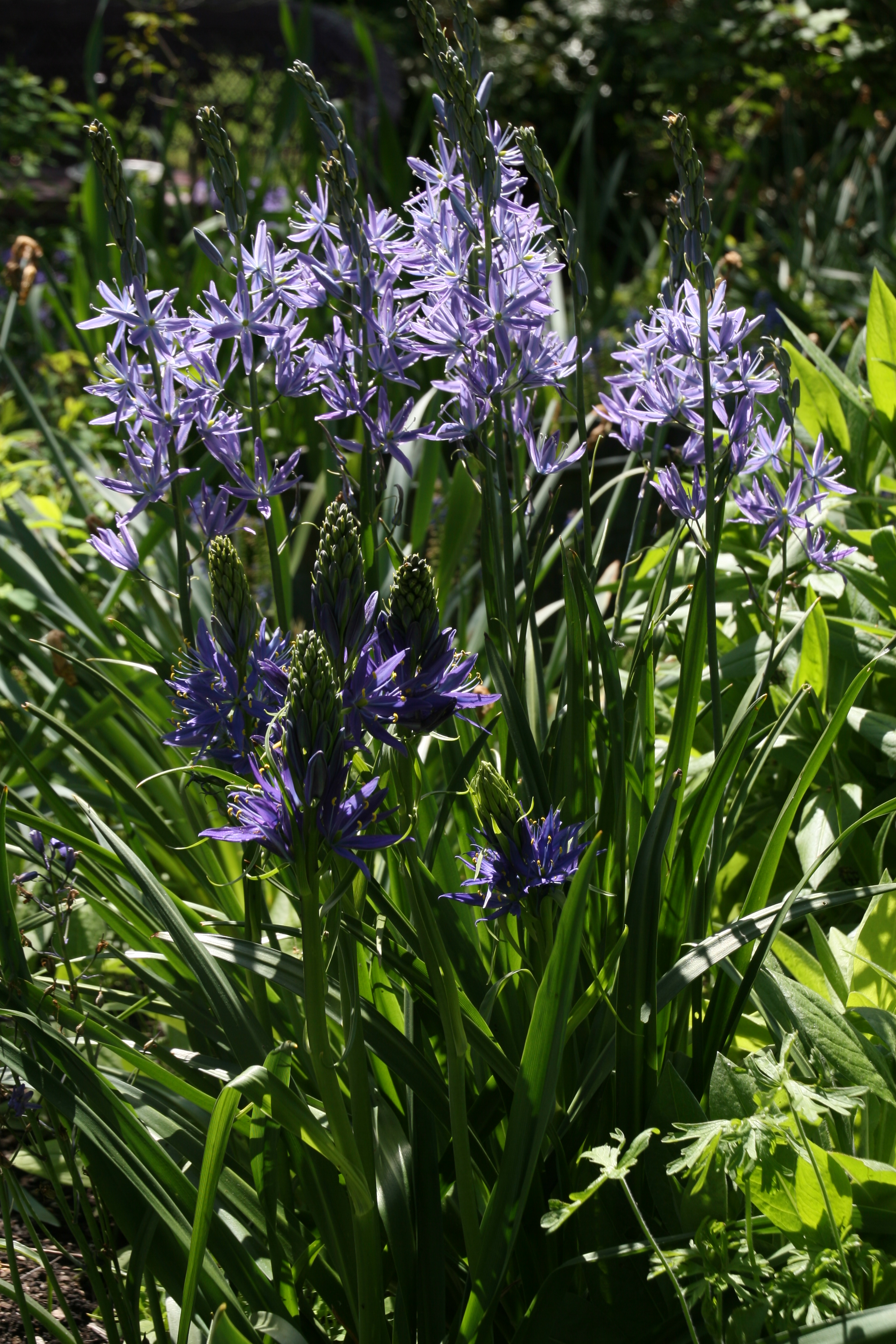
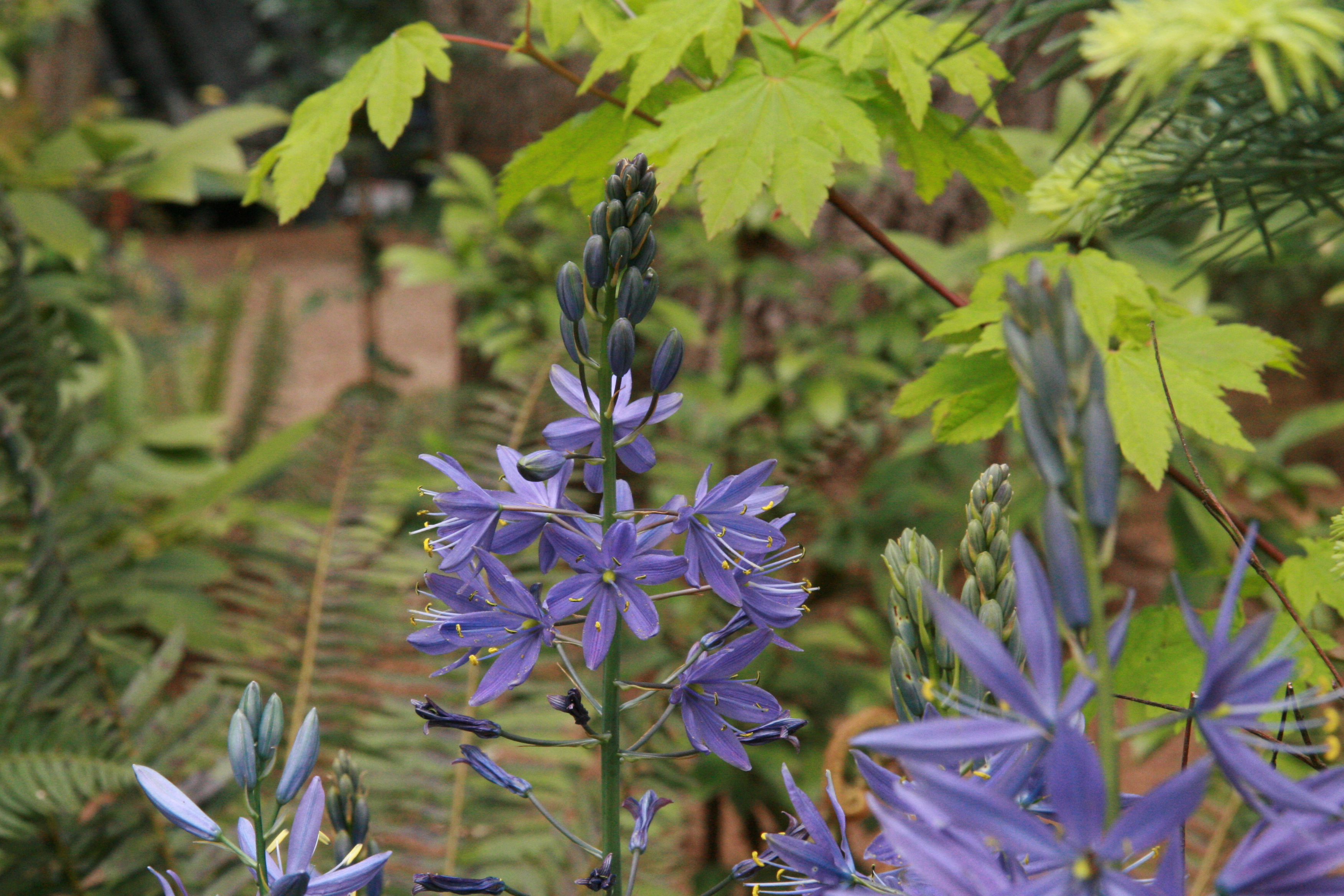
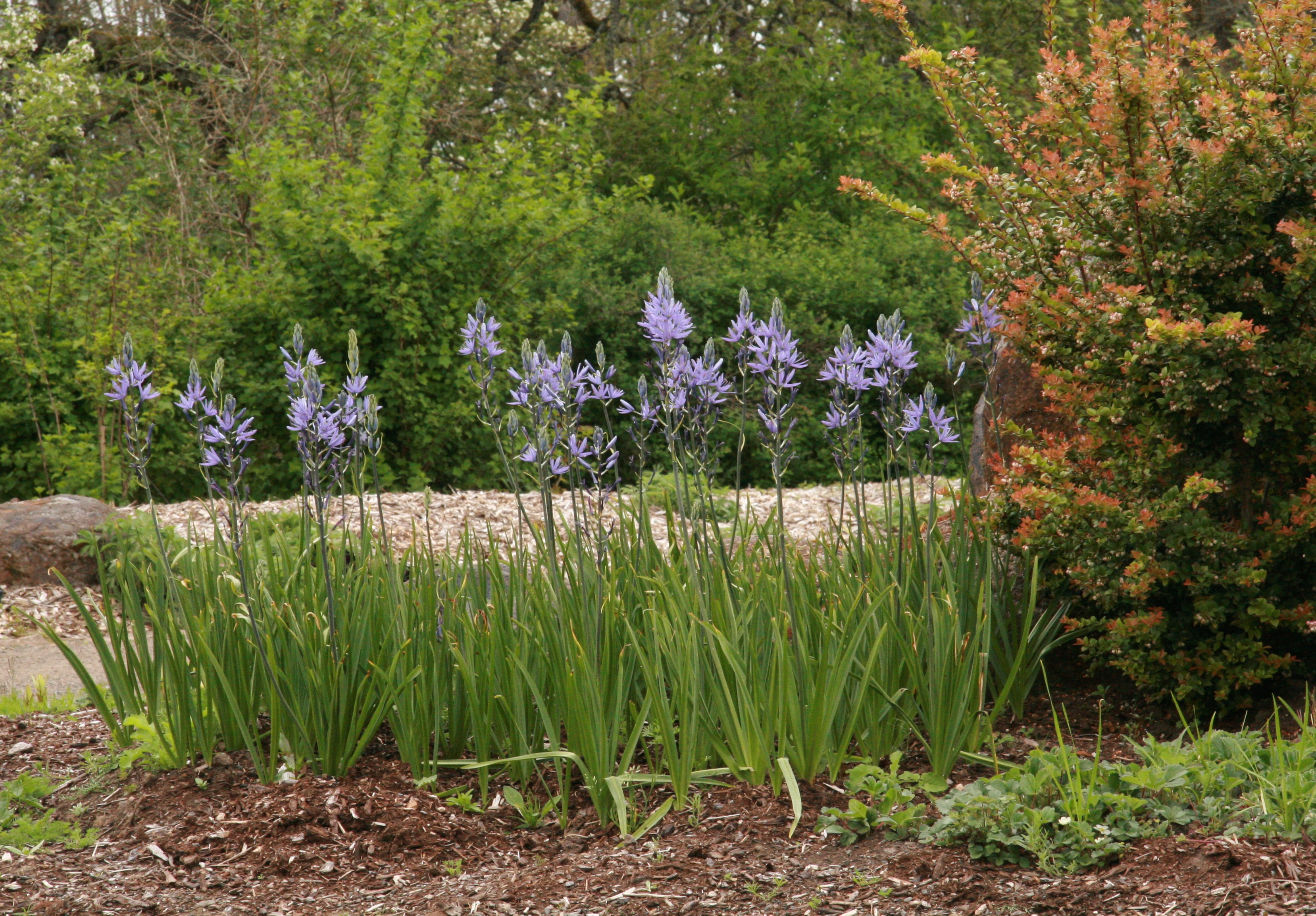
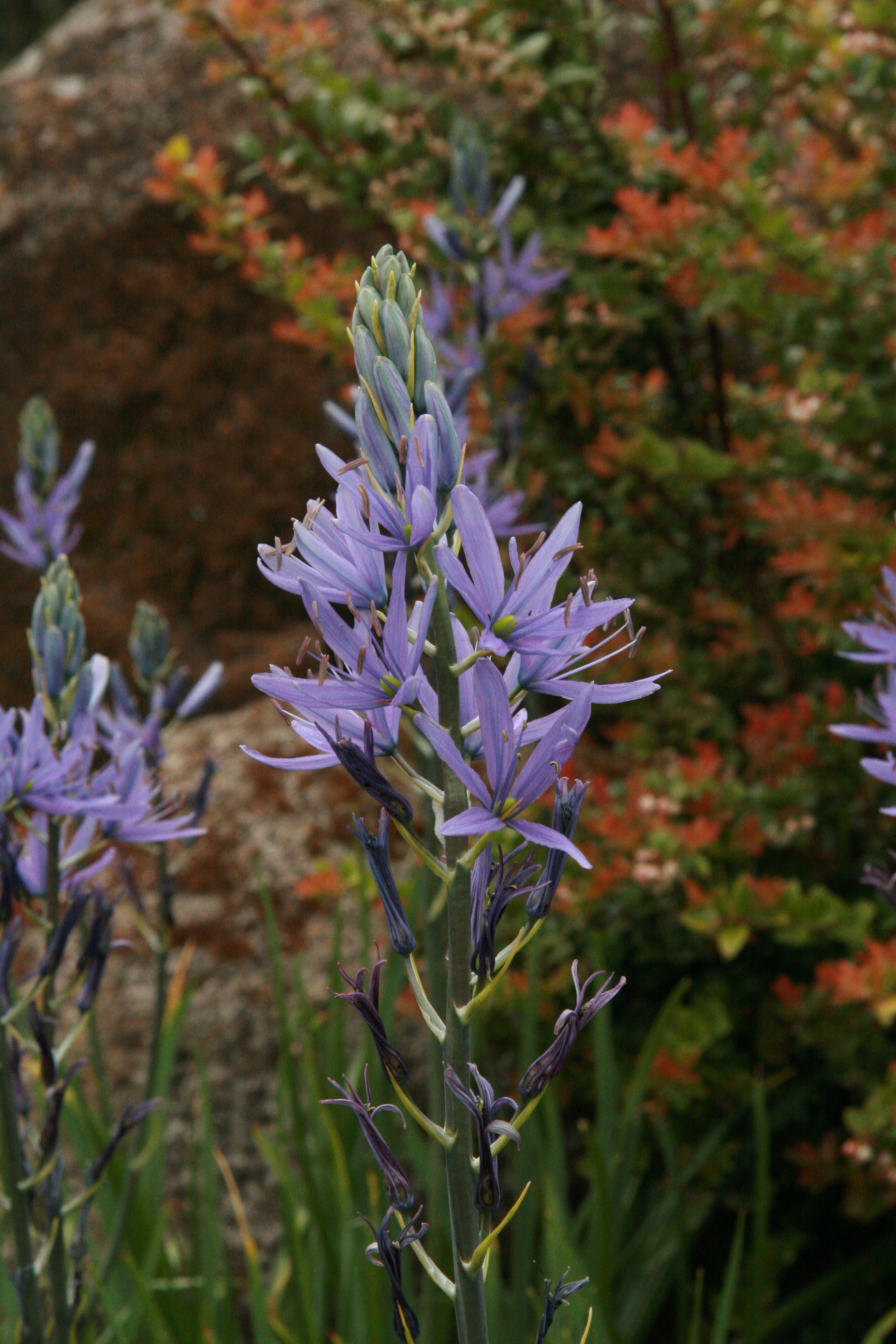
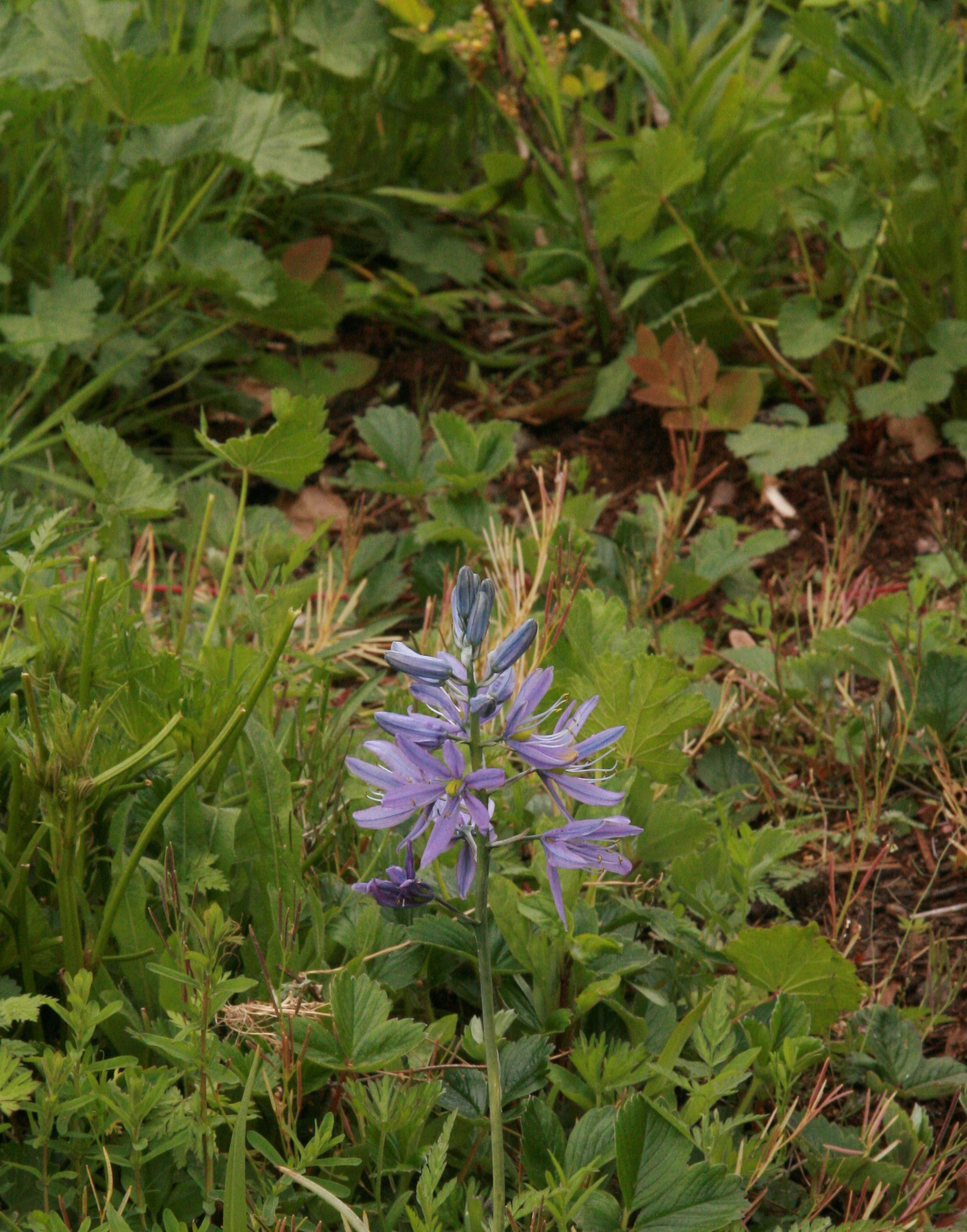
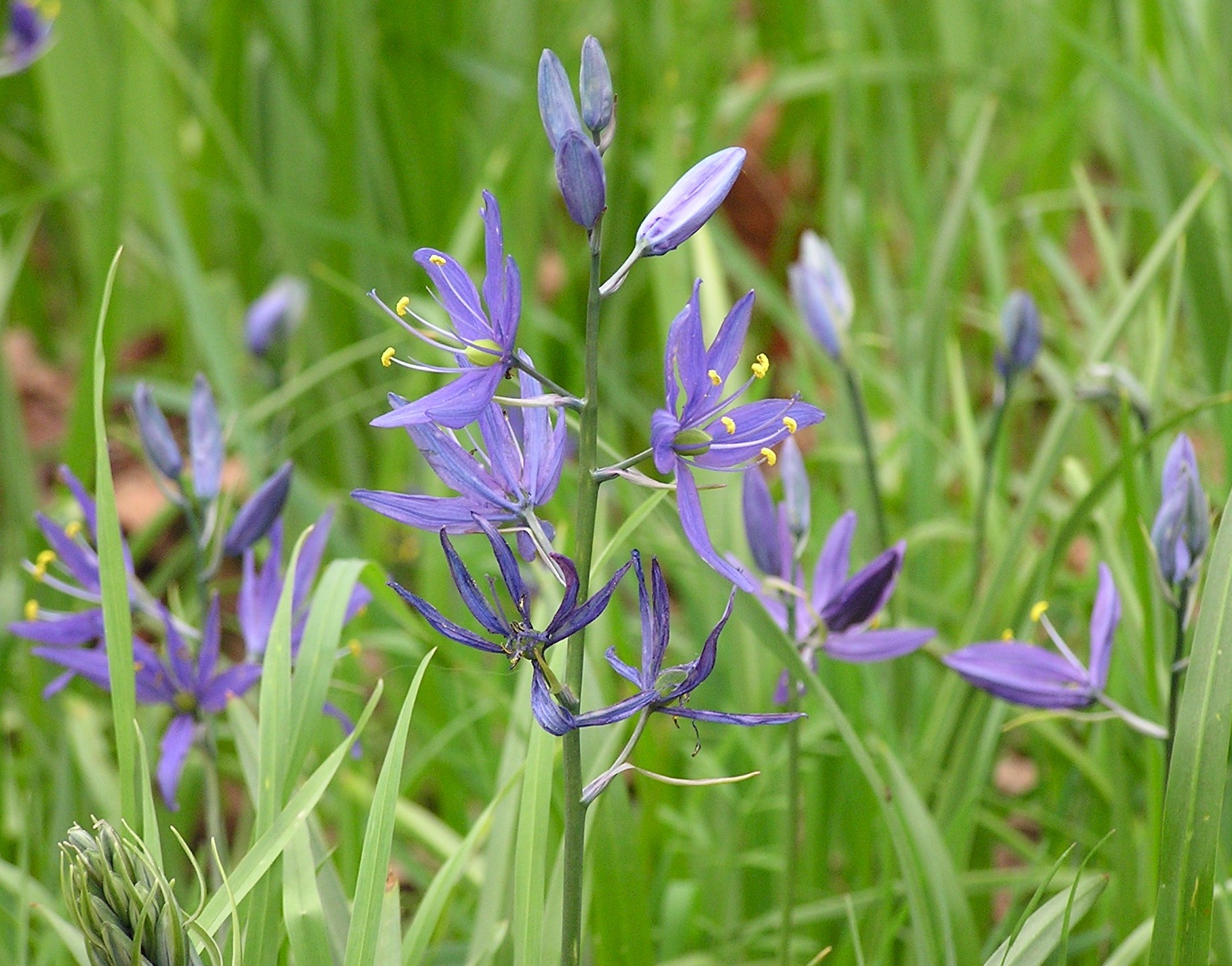
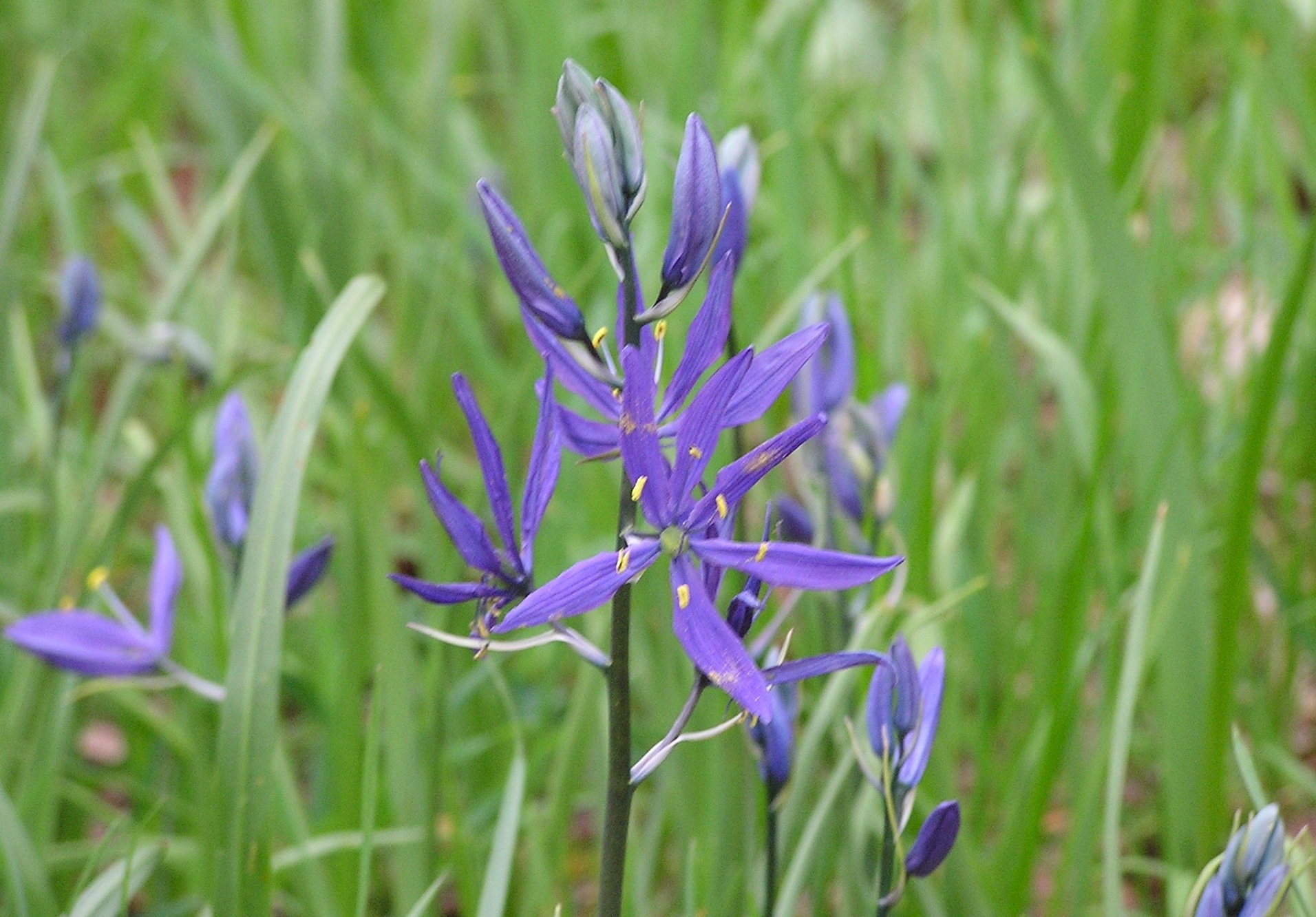
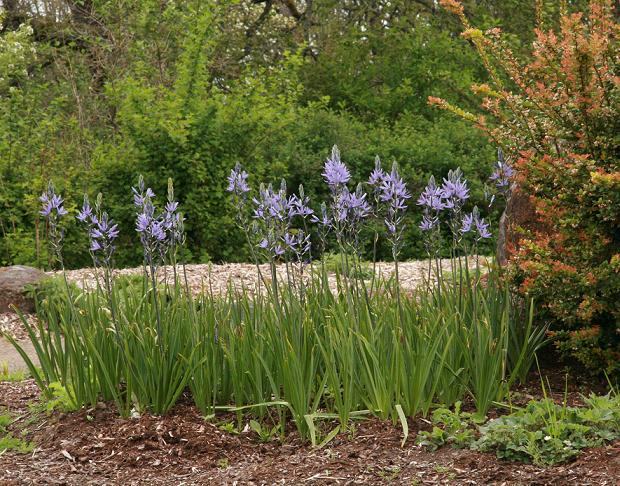
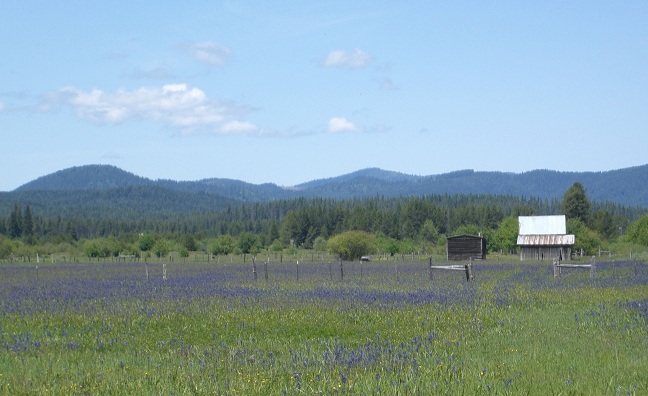
Blue as blue can be, the Camas are blooming--I feel a bouquet coming on! You'll spot these seriously blue star-shaped flower spikes as you travel about the Willamette Valley right now. Oh Joy! Tuck them in your garden, put them all around your landscape. Their leaves are spikes of green and they'll never fail to give your garden a touch of blue each spring. Long treasured by First Nation peoples, celebrations are still held for this diet staple. They are quite delicious roasted on an open fire. If you decide to try them be positive sure you have identified them correctly. Many a would-be wild food gourmet has been unpleasantly surprised by a mis-identified plant. Some can even cause death. |
|
||||||||||||||||||||||||||||||
|
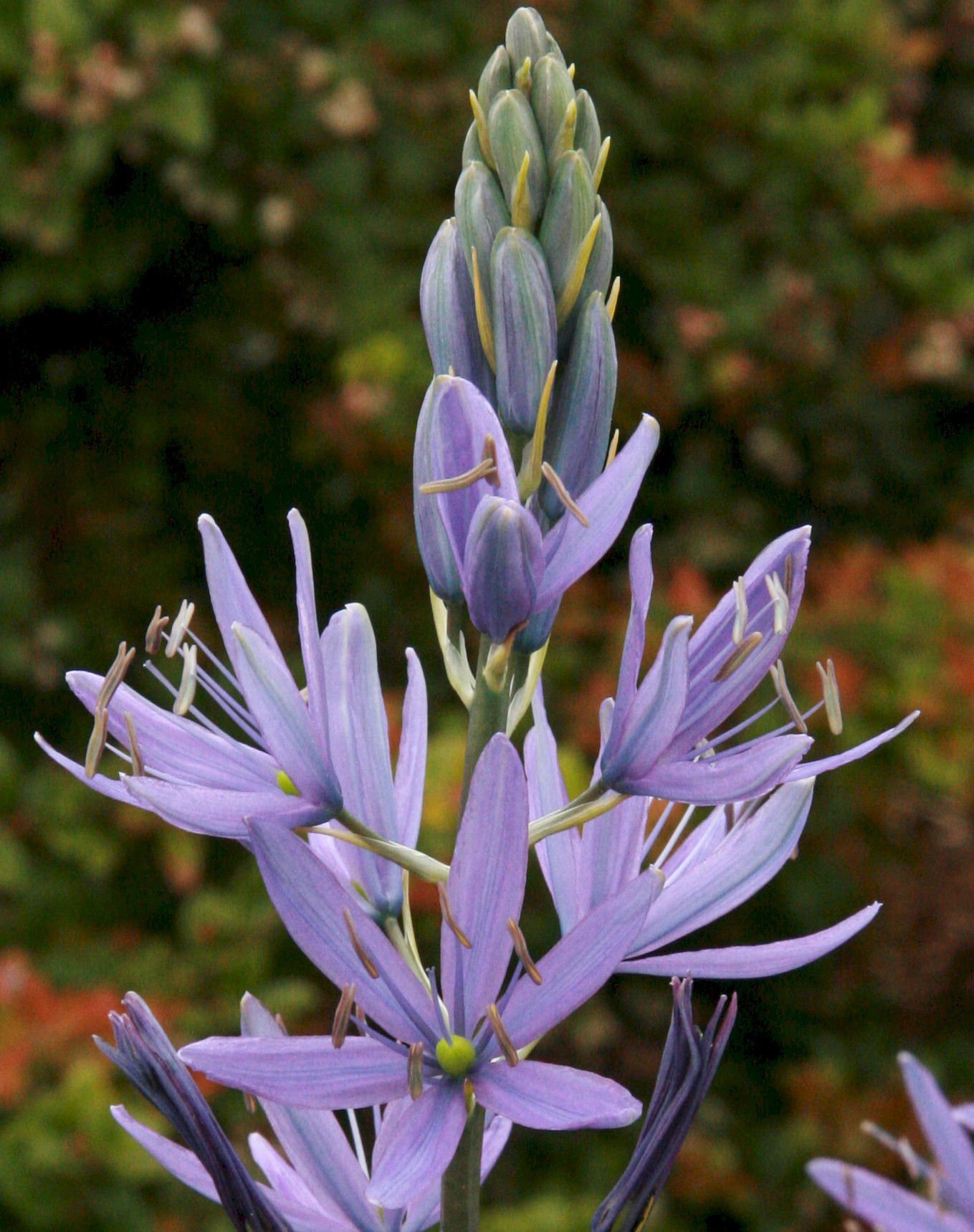
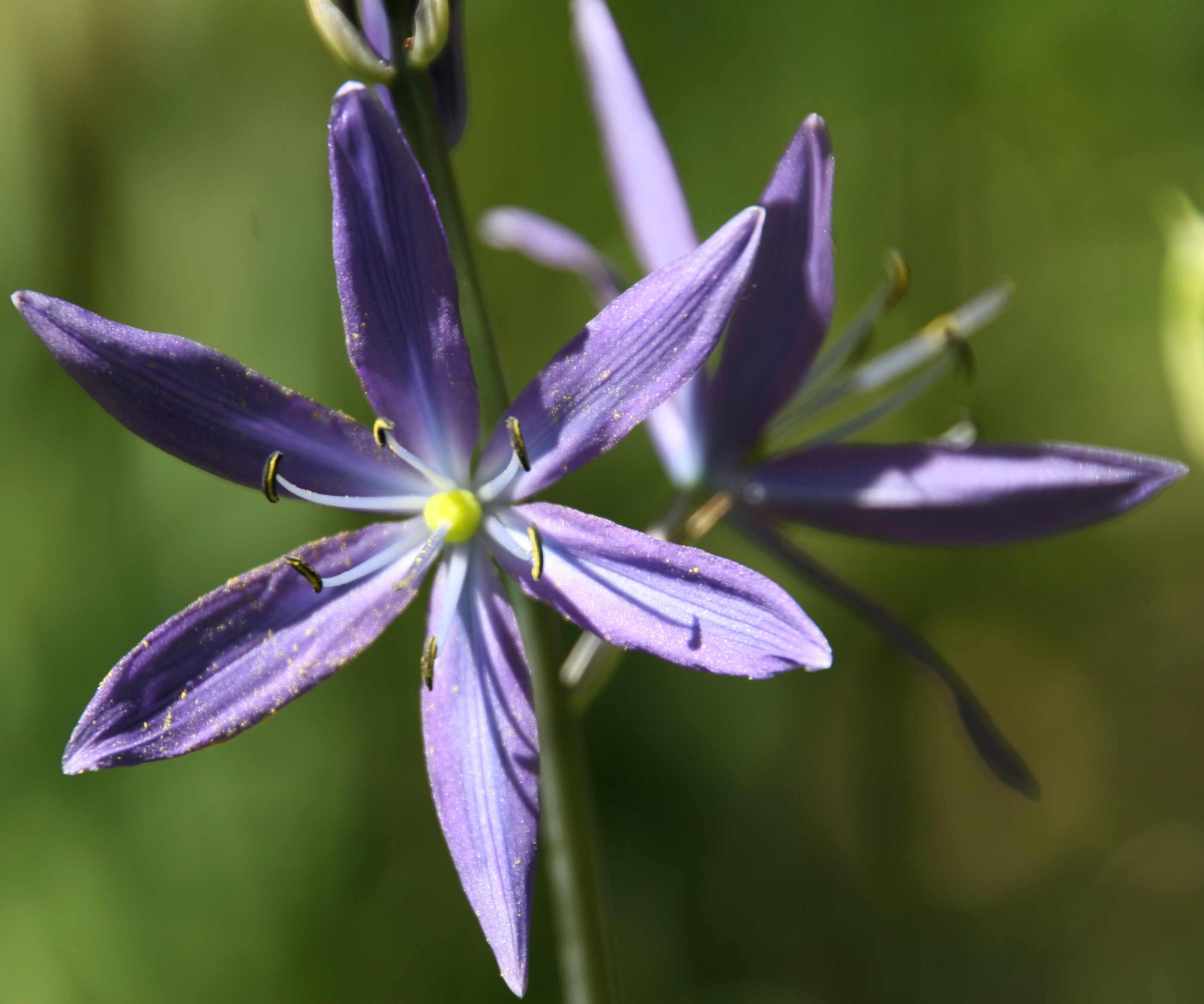
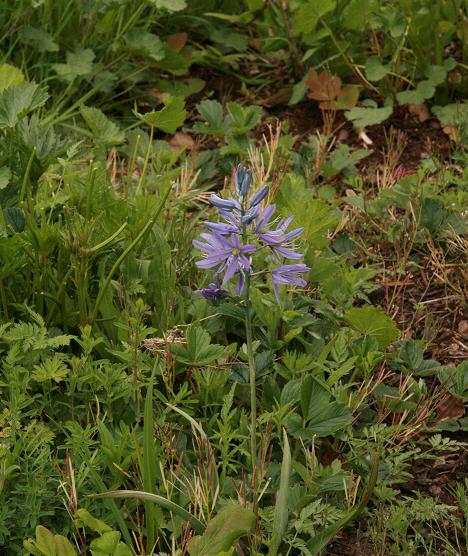
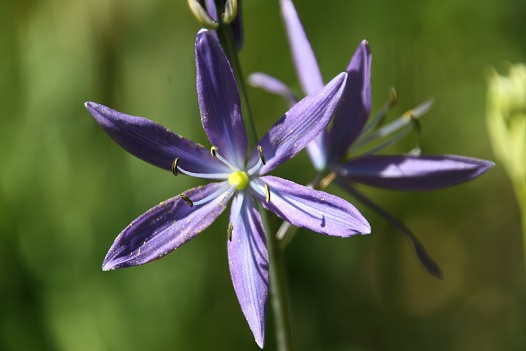
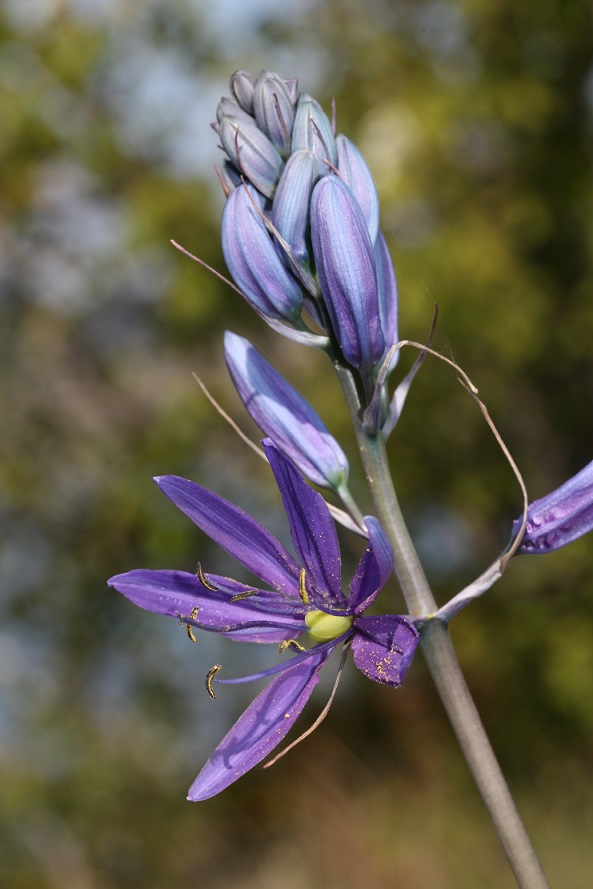
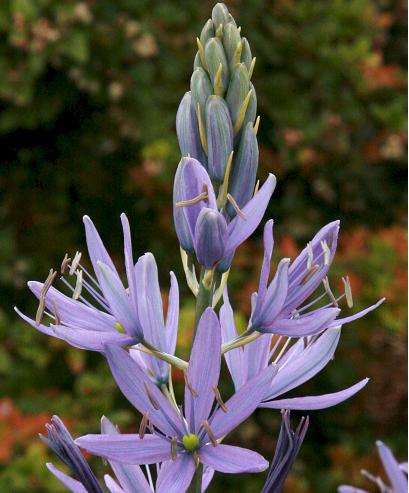
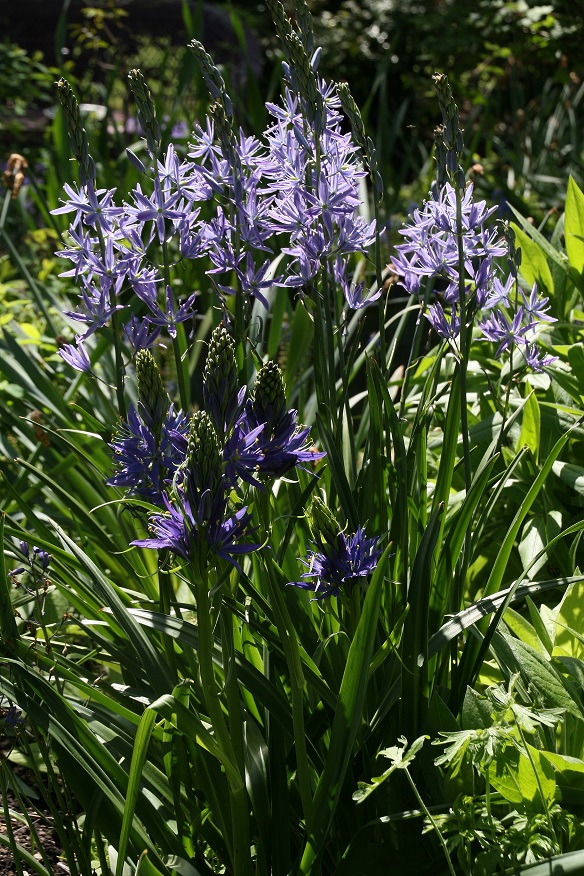
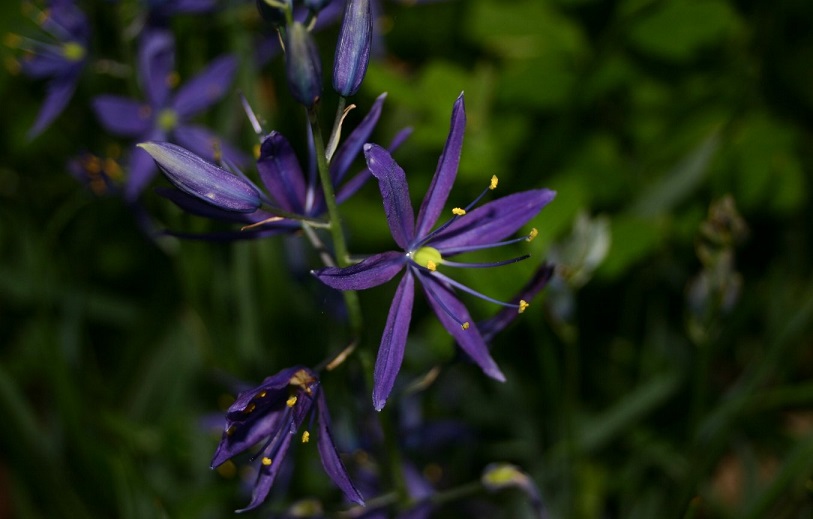
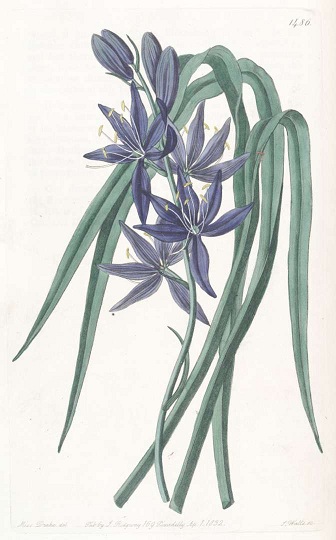
Common Camas has several leaves, similar to those of the daffodil. The beautiful blue violet flowers are shaped like stars and grow along the 12-18" stem in April - May. Common Camas is found along the Pacific coast and east into Idaho. It is hardy between USDA zones 6-10. Native Western Americans relied on Camas for their sustenance and traveled great distances to attain it. The steamed bulbs are very sweet and were sometimes combined with Soapberry (Sheperdia canadensis) to sweeten that fruit. |
|||||||||||||||||||||||||||||||
|
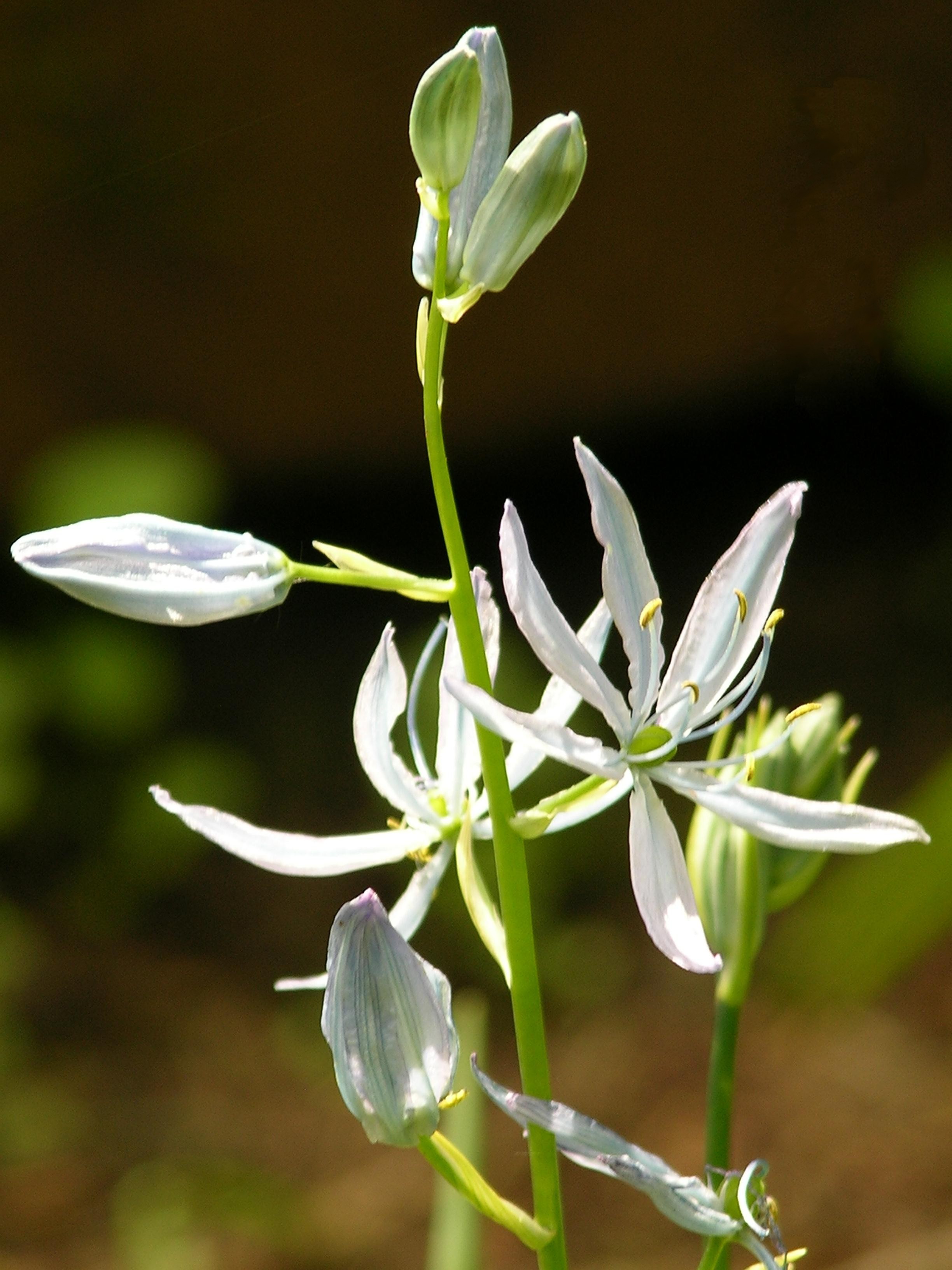
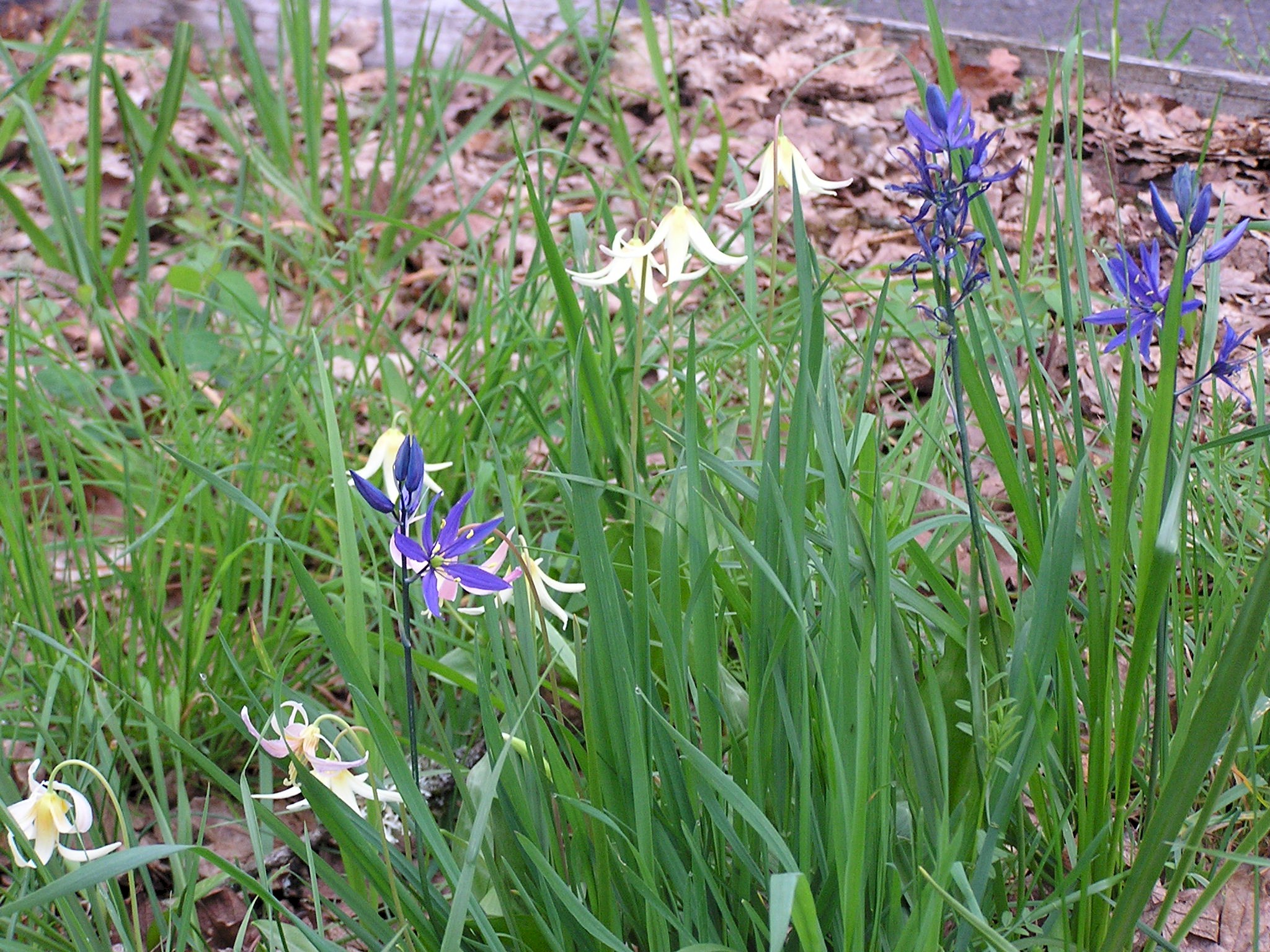
Do take extreme care in tasting Camas as its deadly look-alike, Death Camas (Zigadenus Venenosus), often grows alongside it. The flowers of Death Camas are cream coloured or white, while Common Camas or Leichtlin's Camas has blue flowers. However, the bulbs are harvested after the flowers have gone by, leaving the bulbs of both plants virtually identical. One way to distinguish the two is to tie a marker to the stems but a better way is to post a flag or other marker on sticks surrounding the Death Camas. Camas bulbs may be available from plant nurseries specializing in natives. |
|||||||||||||||||||||||||||||||
|
|||||||||||||||||||||||||||||||
|
Photo, center, credit: Robbie Giles |
|||||||||||||||||||||||||||||||
|
Photo, left, credit: Walter Siegmund; Photo, center, credit: Ben Cody; Photo, right, credit: Sten Porse |
|||||||||||||||||||||||||||||||
|
Photo, left, credit: Leonard Thompson; Photo, center, credit: Leslie Seaton from Seattle, WA; Photo, right, credit: Lake of Blossoms |
|||||||||||||||||||||||||||||||
|
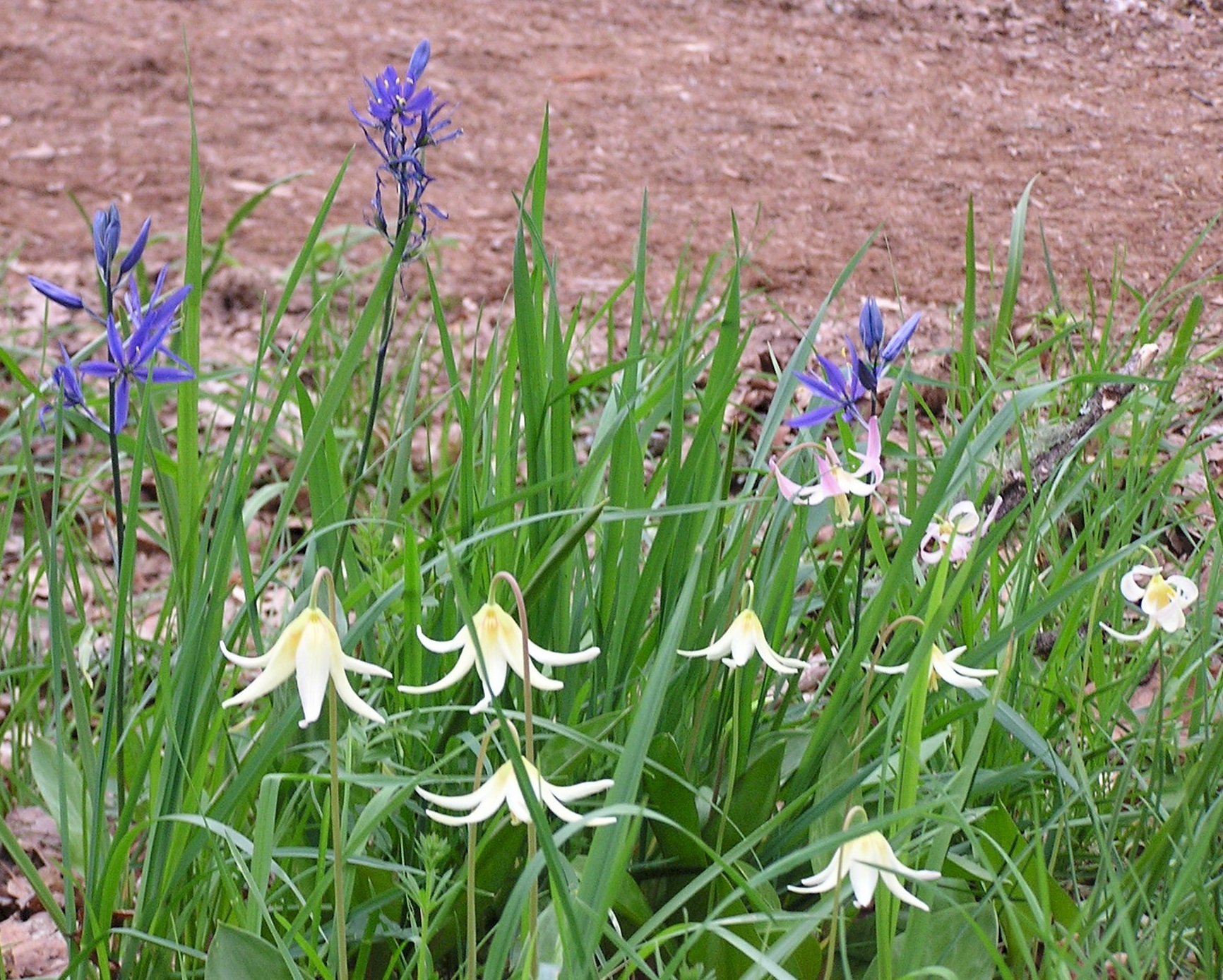
Photo, left, credit: McClintock, Walter_Meadows_of_bistort_(Polygonum_viviparum),_shooting_stars_(Dodecatheon_pauciflorum) and_blue_camas_(Camassia_quamash); Photo, right, credit: Long Tom, Ranali, and Camqua. |
|||||||||||||||||||||||||||||||
|
Scientific name: Ranunculus alismifolius Common name: Plantainleaf Buttercup Scientific name: Camassia quamash Common name: Camas. Spring is here and the flowers are in full bloom at one of Oregon's natural gems. Located on the western edge of Eugene, Oregon, the West Eugene Wetlands (WEW) is a beautiful and rare area of grassland habitats. Comprised of less than one percent of the original native wet prairie, the WEW is home to over 200 species of wildflowers, plants, birds, and animals, including four threatened and endangered species: Fender’s blue butterfly, Kincaid’s lupine, Bradshaw’s lomatium, and Willamette daisy. The BLM's Eugene District, in collaboration with other Rivers to Ridges partners, works to protect and restore this vital wetland ecosystem in the Southern Willamette Valley. This unique project involves federal, state, and local agencies, as well as non-profit organizations, working together to manage lands and resources in an urban area for multiple public benefits. Each year, Willamette Resources & Educational Network (WREN) provides hands-on, minds-on environmental education to over 1,500 local students. Photo credits: Christine Williams, Mackenzie Cowan, Sandra Miles, Sally Villegas, and West Eugene Wetlands staff. For directions or to plan a visit to the West Eugene Wetlands: on.doi.gov/10IIPkt |
Photos We Share!
|
||||||||||||||||||||||||||||||
|


sm.jpg)

sm.jpg)

,_shooting_stars_(Dodecatheon_pauciflorum)_and_blue_camas_(Camassia_quash)._36.jpg)
sm.jpg)