|
Northwest
Native Willows (Salix)
|
|
Kingdom |
: |
Plantae – Plants
|
|
Subkingdom |
: |
Tracheobionta – Vascular
plants |
|
Superdivision |
: |
Spermatophyta – Seed
plants |
|
Division |
: |
Magnoliophyta – Flowering
plants |
|
Class |
: |
Magnoliopsida – Dicotyledons
|
|
Subclass |
: |
Dilleniidae |
|
Order |
: |
Salicales |
|
Family |
: |
Salicaceae – Willow family
|
|
Genus |
: |
Salix L. – willow
|
|
Species of
this genus native to the Pacific
Northwest: Washington, Oregon,
California and some Canadian Provinces |
| Salix
L. |
Willow |
| Salix
amygdaloides Andersson |
Peachleaf Willow |
|
Salix arctica Pall. |
Arctic Willow |
| Salix
bebbiana Sarg. |
Bebb Willow |
| Salix
boothii Dorn |
Booth's Willow |
| Salix
brachycarpa Nutt. |
Shortfruit Willow |
|
Salix brachycarpa Nutt. var.
brachycarpa |
Shortfruit Willow |
| Salix
commutata Bebb |
Undergreen Willow |
| Salix
delnortensis C.K. Schneid. |
Del Norte Willow |
| Salix
drummondiana Barratt ex Hook. |
Drummond's Willow |
| Salix
eastwoodiae Cockerell ex A. Heller |
Mountain Willow |
| Salix
exigua Nutt. |
Narrowleaf Willow |
| Salix
farriae C.R. Ball |
Farr's Willow |
| Salix
geyeriana Andersson |
Geyer Willow |
| Salix
glauca L. |
Grayleaf Willow |
| Salix
glauca L. ssp.
glauca |
Grayleaf Willow |
| Salix
glauca L. ssp.
glauca var.
villosa (D. Don ex
Hook.) Andersson |
Grayleaf Willow |
| Salix
hookeriana Barratt ex Hook. |
Dune Willow |
| Salix
laevigata Bebb |
Red Willow |
| Salix
lasiolepis Benth. |
Arroyo Willow |
| Salix
lasiolepis Benth. var.
bigelovii (Torr.) Bebb |
Bigelow's Willow |
|
Salix lasiolepis Benth. var.
lasiolepis |
Arroyo Willow |
| Salix
lemmonii Bebb |
Lemmon's Willow |
| Salix
ligulifolia (C.R. Ball) C.R. Ball ex C.K. Schneid. |
Strapleaf Willow |
| Salix
lucida Muhl. |
Shining Willow |
| Salix
lucida Muhl. ssp.
caudata (Nutt.) A.E. Murray |
Greenleaf Willow |
| Salix
lucida Muhl. ssp.
lasiandra (Benth.) A.E. Murray |
Pacific Willow |
| Salix
lutea Nutt. |
Yellow Willow |
| Salix
melanopsis Nutt. |
Dusky Willow |
| Salix
monochroma C.R. Ball |
Onecolor Willow |
| Salix
nivalis Hook. |
Snow Willow |
| Salix
orestera C.K. Schneid. |
Sierra Willow |
| Salix
pedicellaris Pursh |
Bog Willow |
|
Salix ×pendulina Wender. [fragilis × ?sepulcralis] |
Wisconsin Weeping Willow |
|
Salix petrophila Rydb. |
Alpine Willow |
| Salix
planifolia Pursh |
Diamondleaf Willow |
|
Salix planifolia Pursh ssp.
planifolia |
Diamondleaf Willow |
| Salix
prolixa Andersson |
MacKenzie's Willow |
| Salix
×rubens Schrank (pro sp.) [alba × fragilis] |
Hybrid Crack Willow |
| Salix
scouleriana Barratt ex Hook. |
Scouler's Willow |
|
Salix ×sepulcralis Simonkai [alba × ?pendulina] |
Weeping Willow |
| Salix
sessilifolia Nutt. |
Northwest Sandbar Willow |
| Salix
sitchensis Sanson ex Bong. |
Sitka Willow |
| Salix
tracyi C.R. Ball |
Tracy's Willow |
| Salix
vestita Pursh |
Rock Willow |
| Salix
wolfii Bebb |
Wolf's Willow |
|
 |
|
General Information For This Genus
Click on links at bottom of this page for
photos and details of each plant. |
|
Note:
Throughout the years I've written short articles for our
website's home pages (home pages are the front page of a
website) about these plants. They are now included at the bottom
of this page, and are illustrated by botanical drawings and
paintings, some of which are from books published from 1500 -
1900. |
|
|
Willows are among the mid-range layer of plants in the
native garden, filling the space between the top canopy and the lower bushes.
Choose trees and shrubs in a range of heights so the birds have several layers
of canopy to hide in. This inner area is excellent for wildlife foods--a
sampling of nuts, seeds, berry, and other fruits will set the wildlife table
from now until spring. |
|
Willow species,
Dwarf Mountain Ash (Sorbus scopulina),
sumac (Rhus), taller
ceanothus species, and Twin Berry (Lonicera
involucrata), for example, fill this bill admirably. In addition, willows
are the gold standard for building furniture and garden structures.
In general, willows are easy to grow and they mature
rapidly. They are excellent in many landscape applications. They are deciduous.
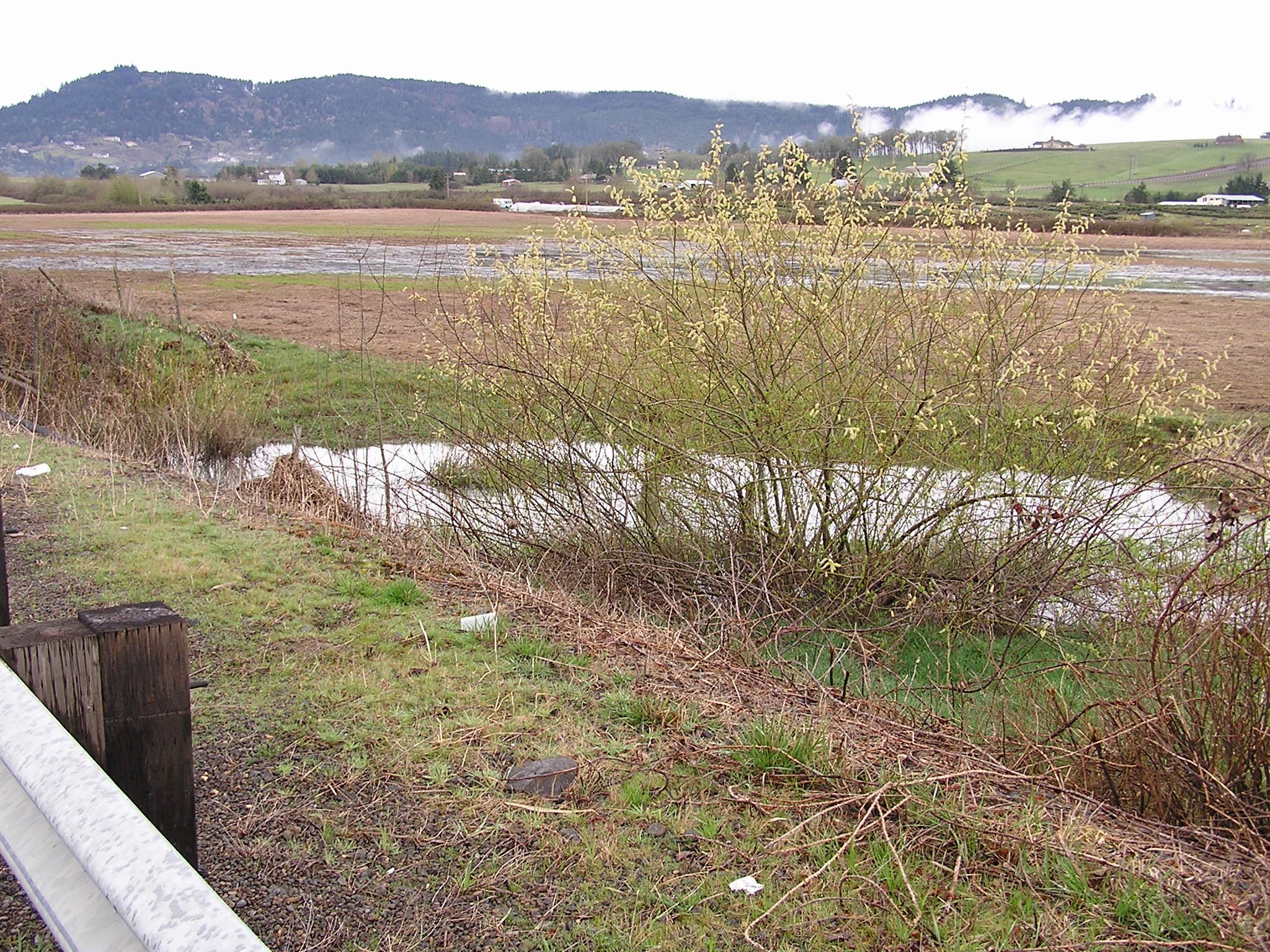
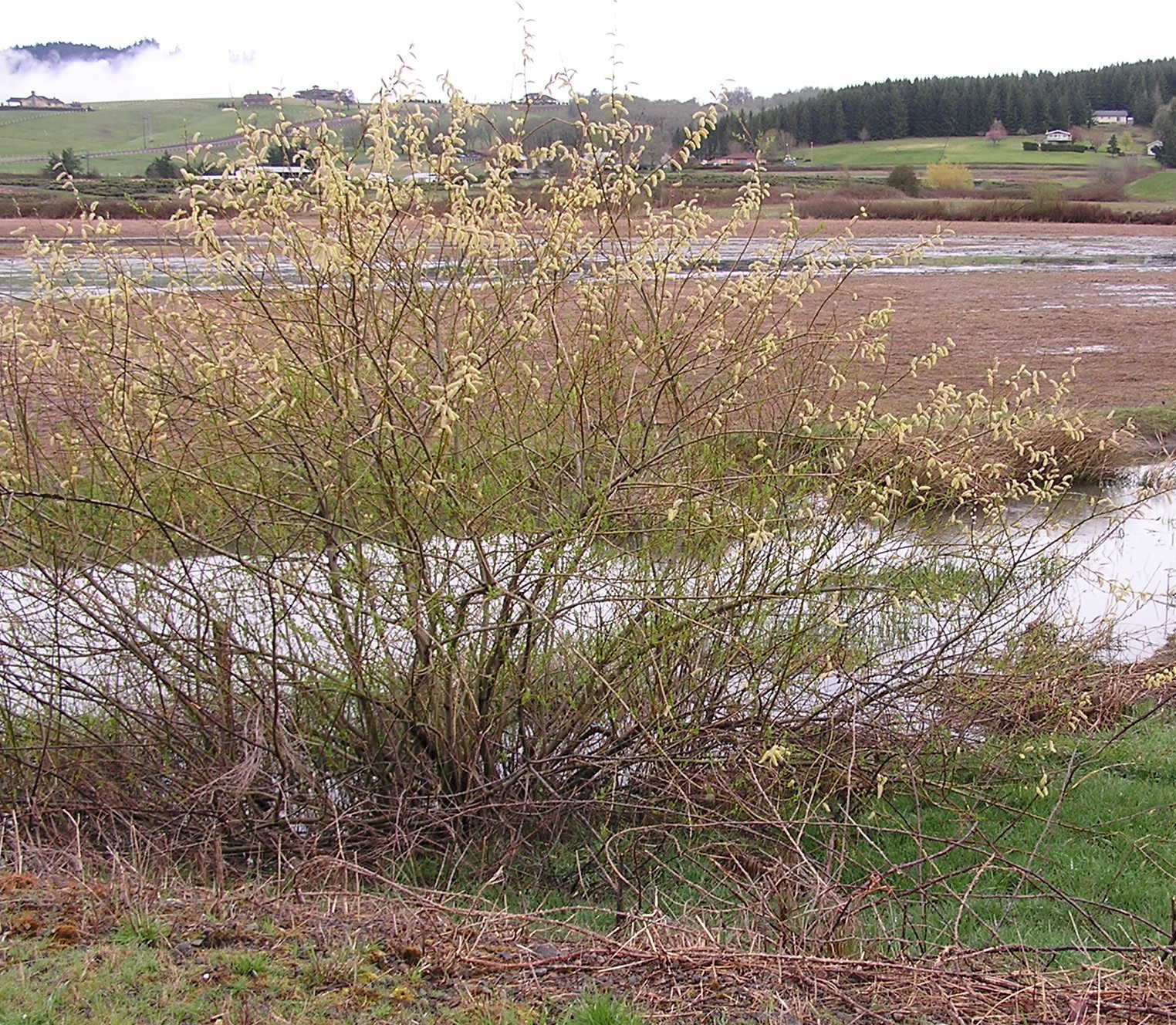
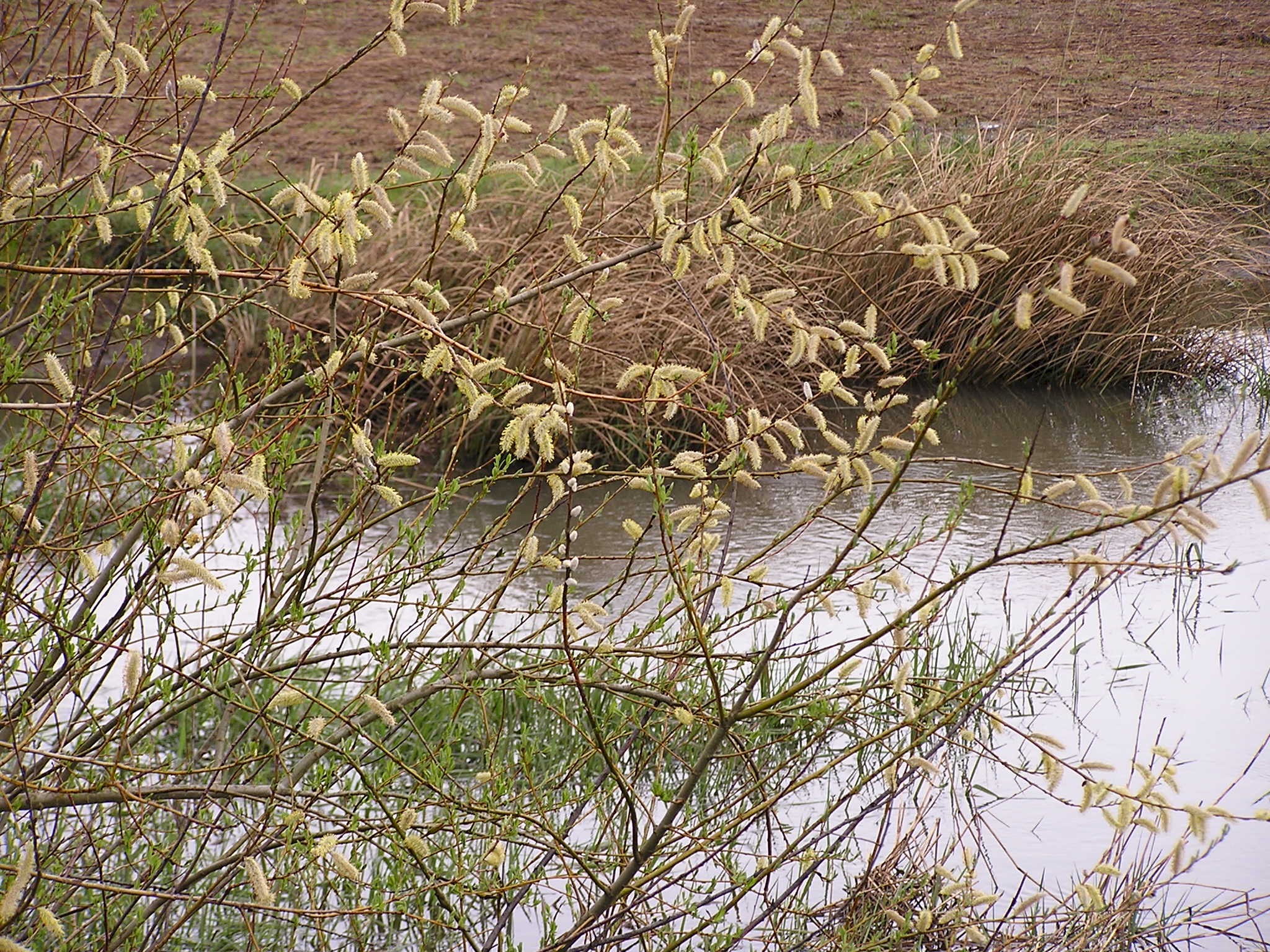
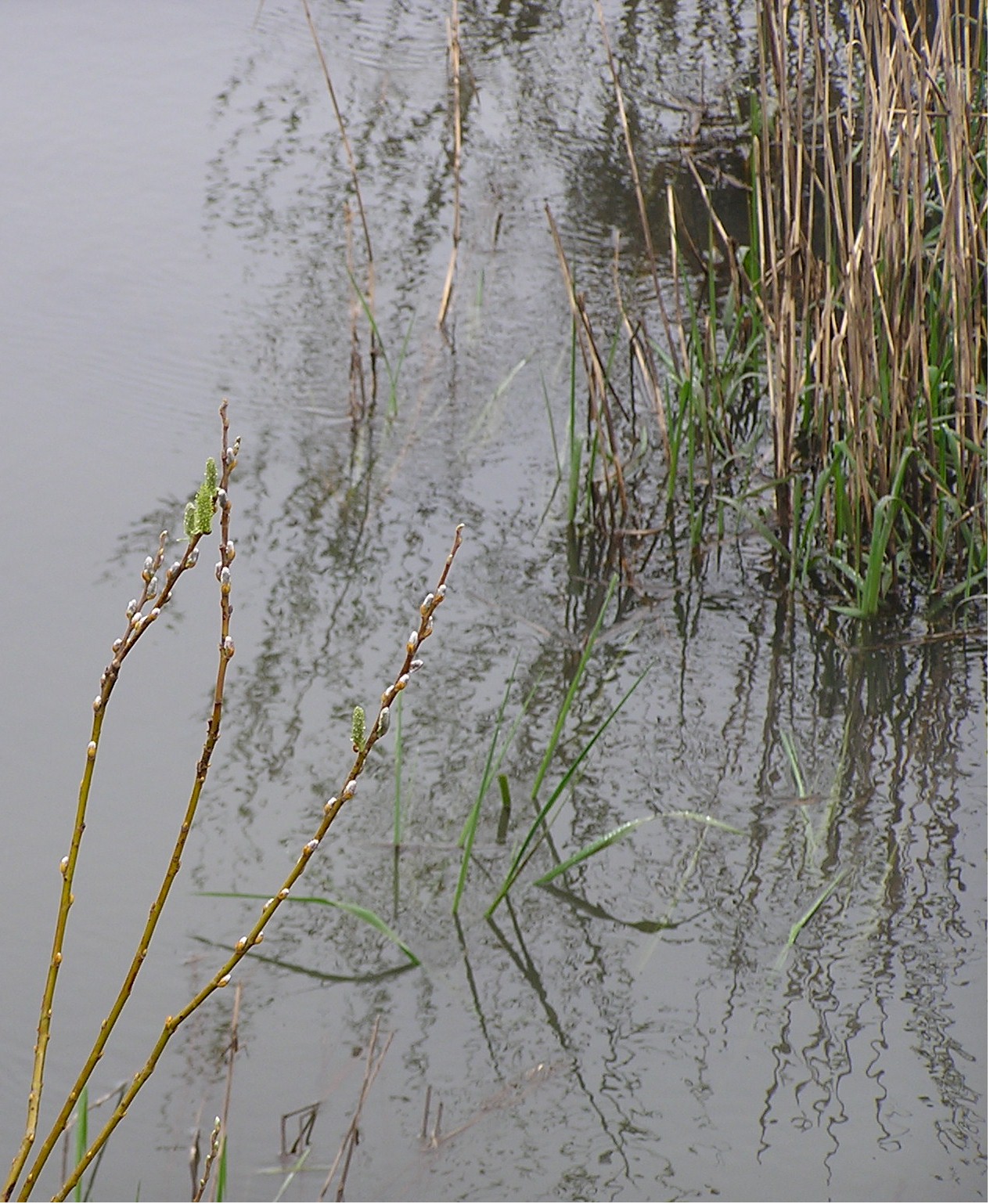
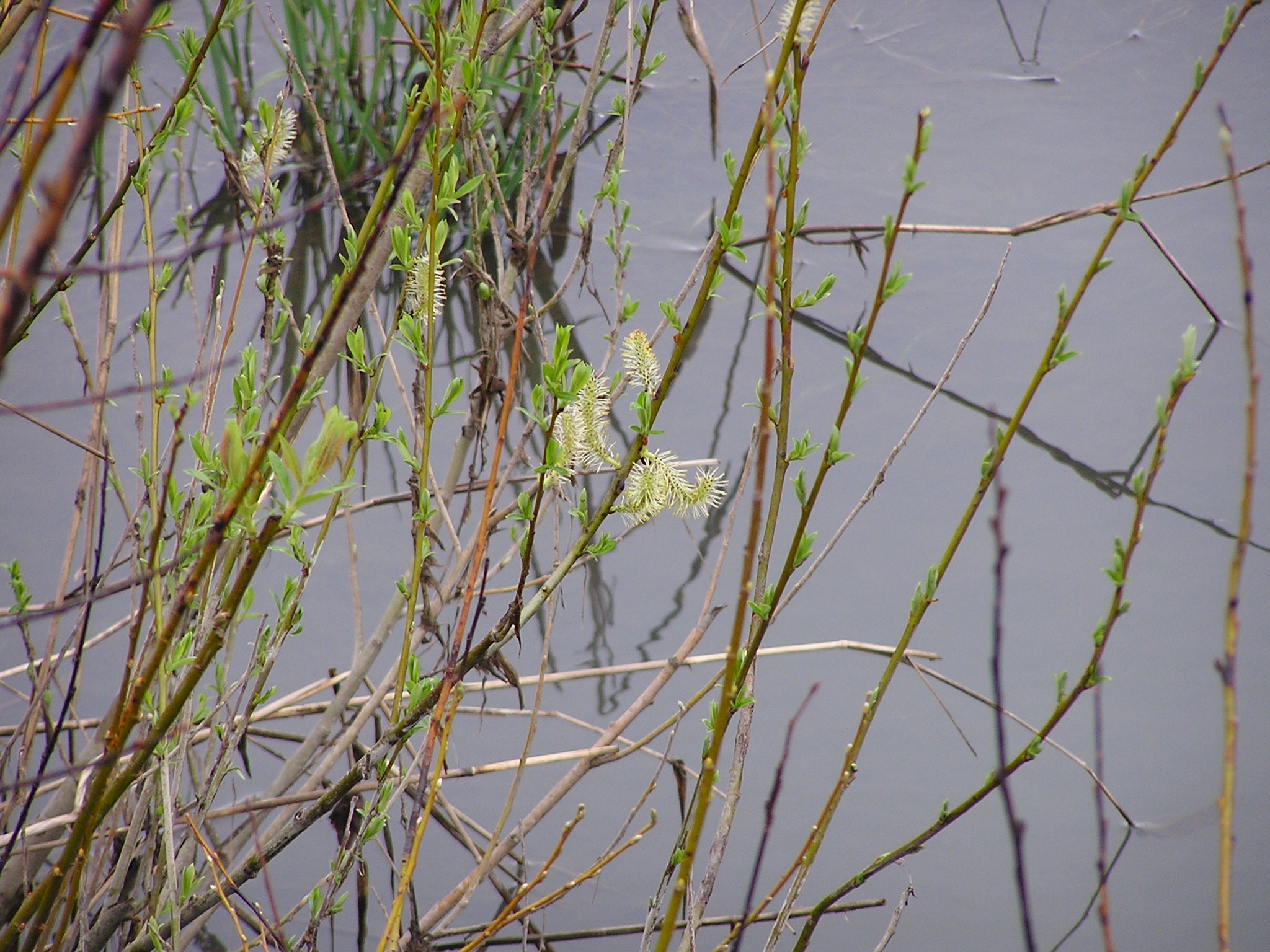
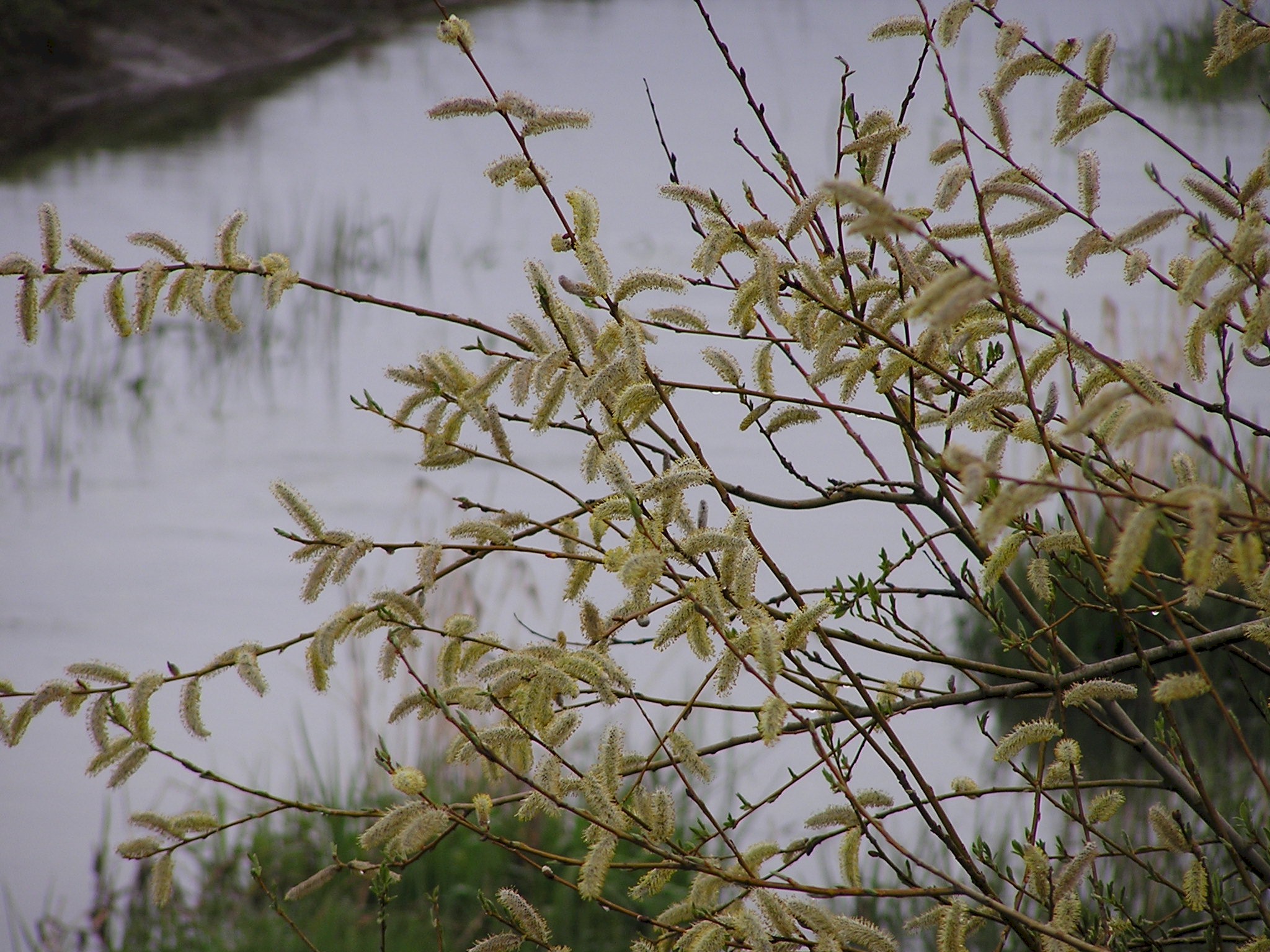
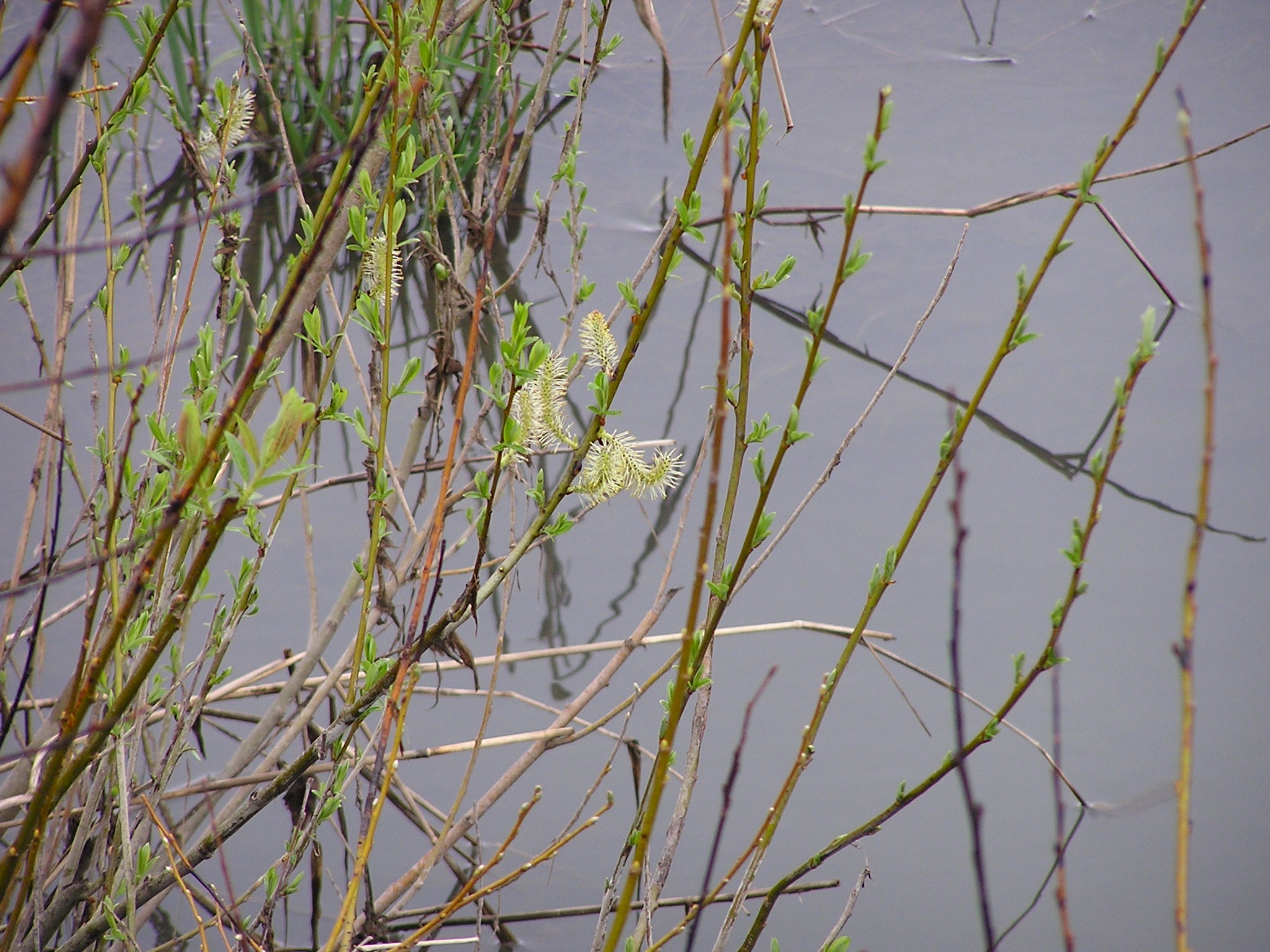
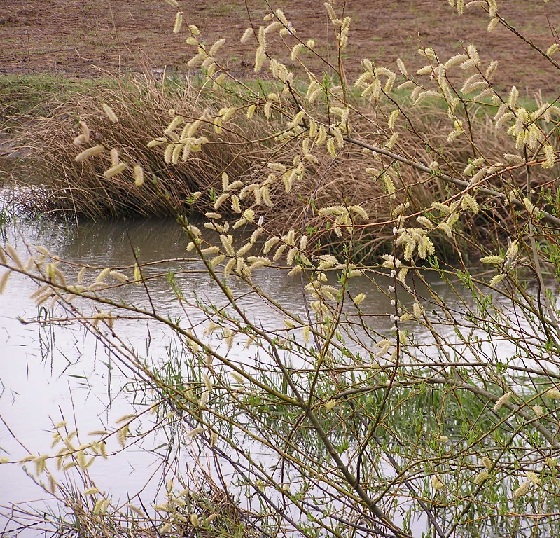
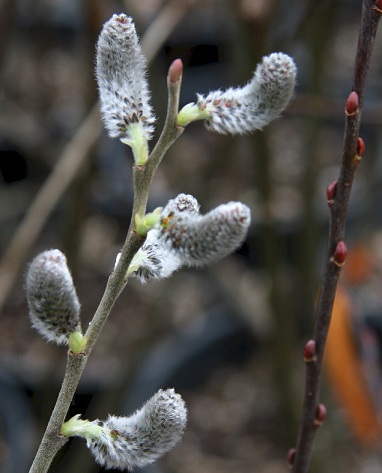
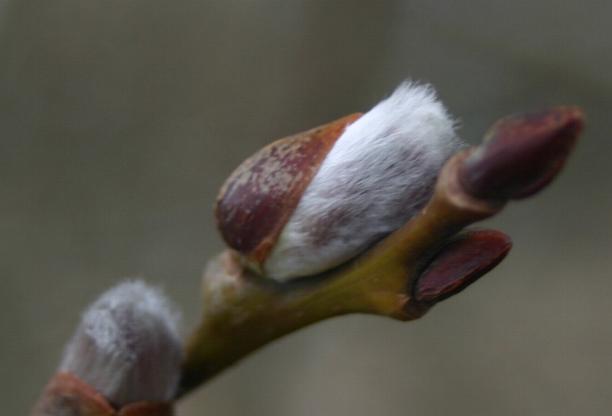
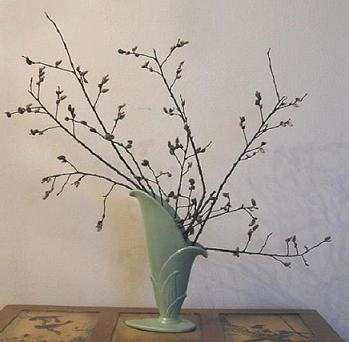
In spring the bare branches sprout fuzzy catkins that are shades of grey and
very soft to the touch, giving these plants the common name of 'pussy willows.'
It is at this stage cuttings are often taken for long lasting decorations. |
 |
|
Plant
a grove and cut some every year for crafts. Willows are pliant and strong and
make beautiful wreaths and chairs and tables and trellis--the only limit is your
imagination! When
I was in grade school our teacher brought in some branches and showed us how to
color the catkins with crayons. |
 |
|
Photo above
center from Sten Porse
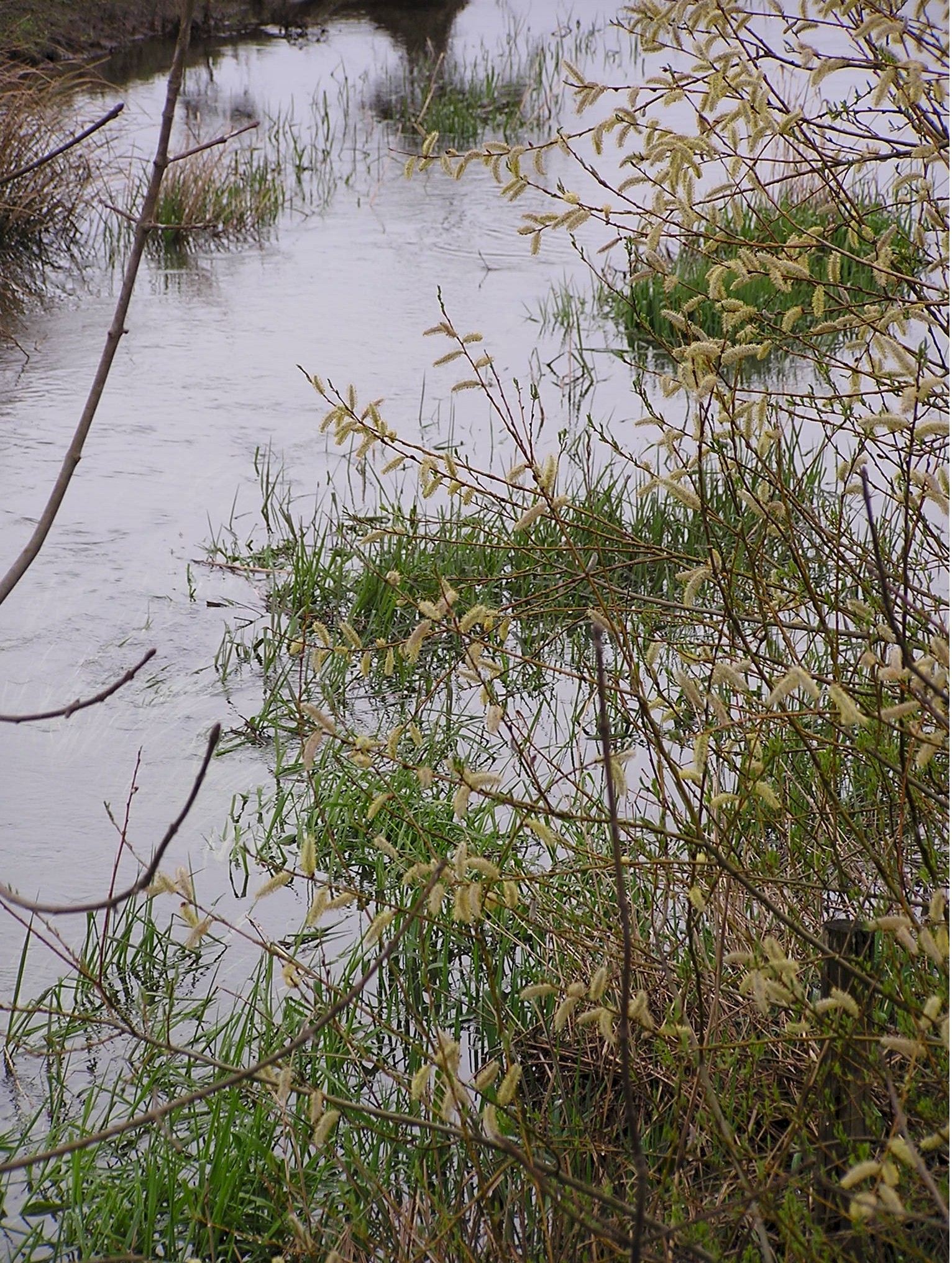
These little catkins eventually bloom and then
unfold into leaves. As the leaves mature they take on the usual leaf shape for
each species and all trace of the original furry texture is gone.
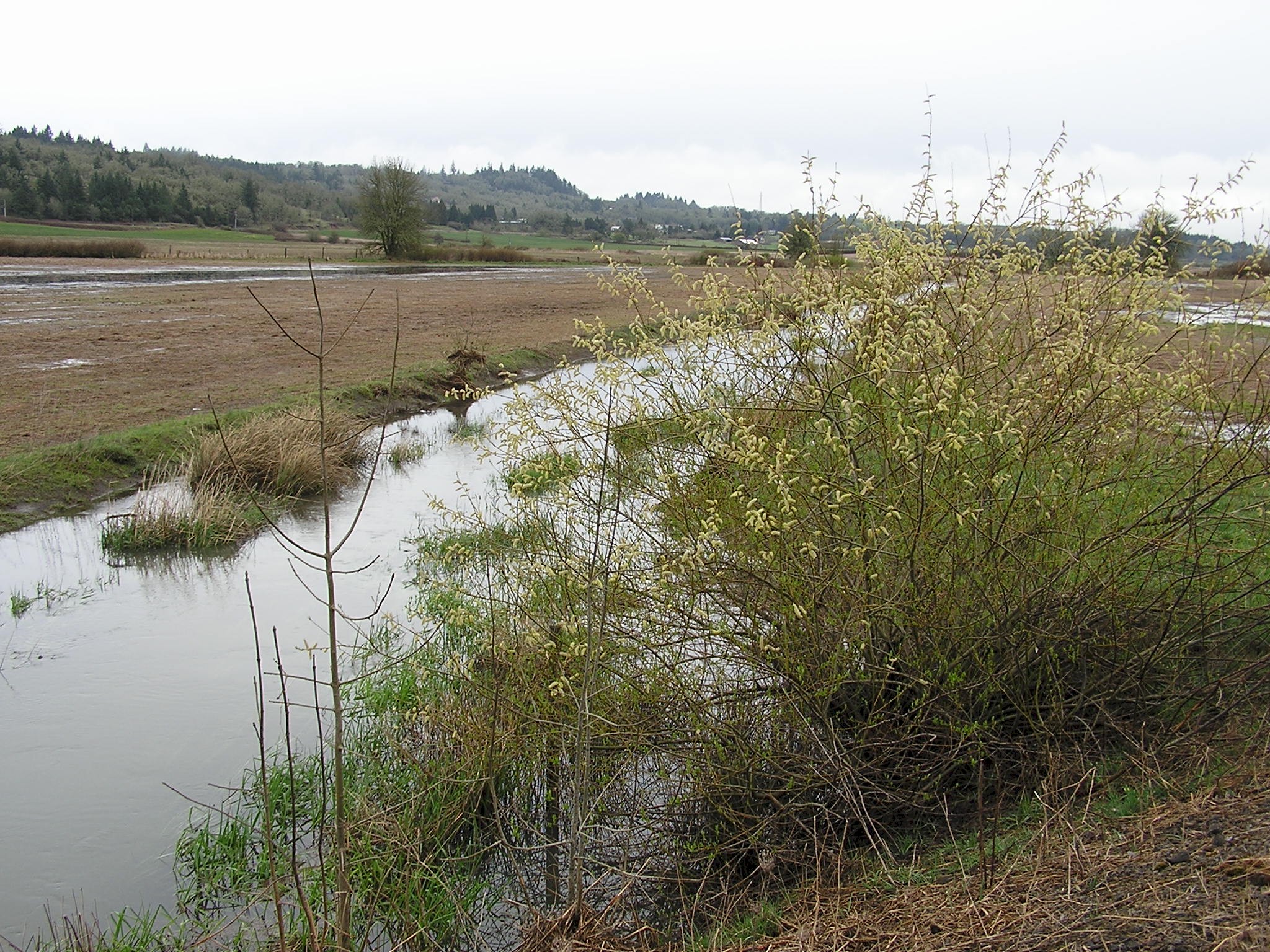
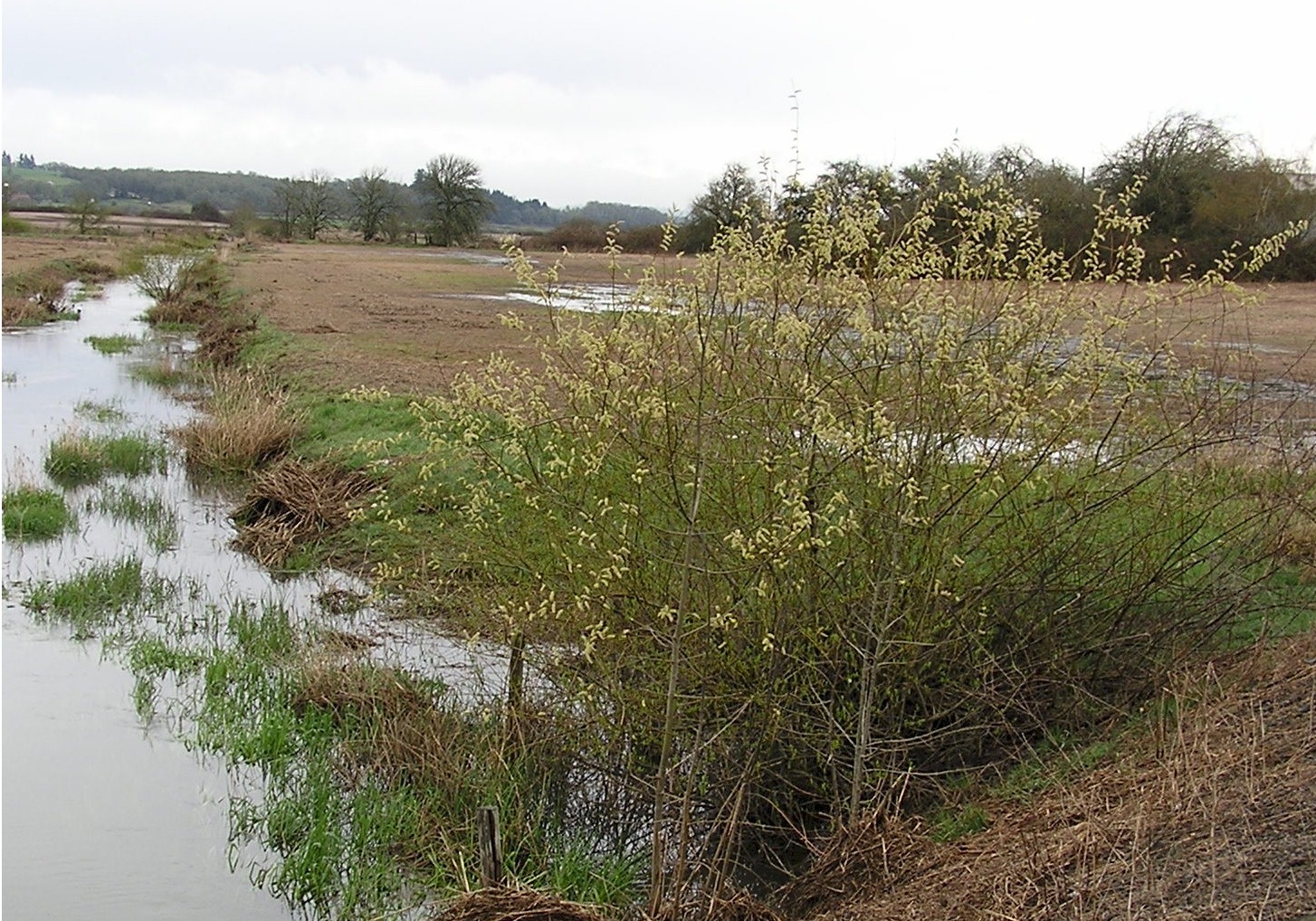
Willows perform an important service to rivers. See http://www.riverpartners.org/about/
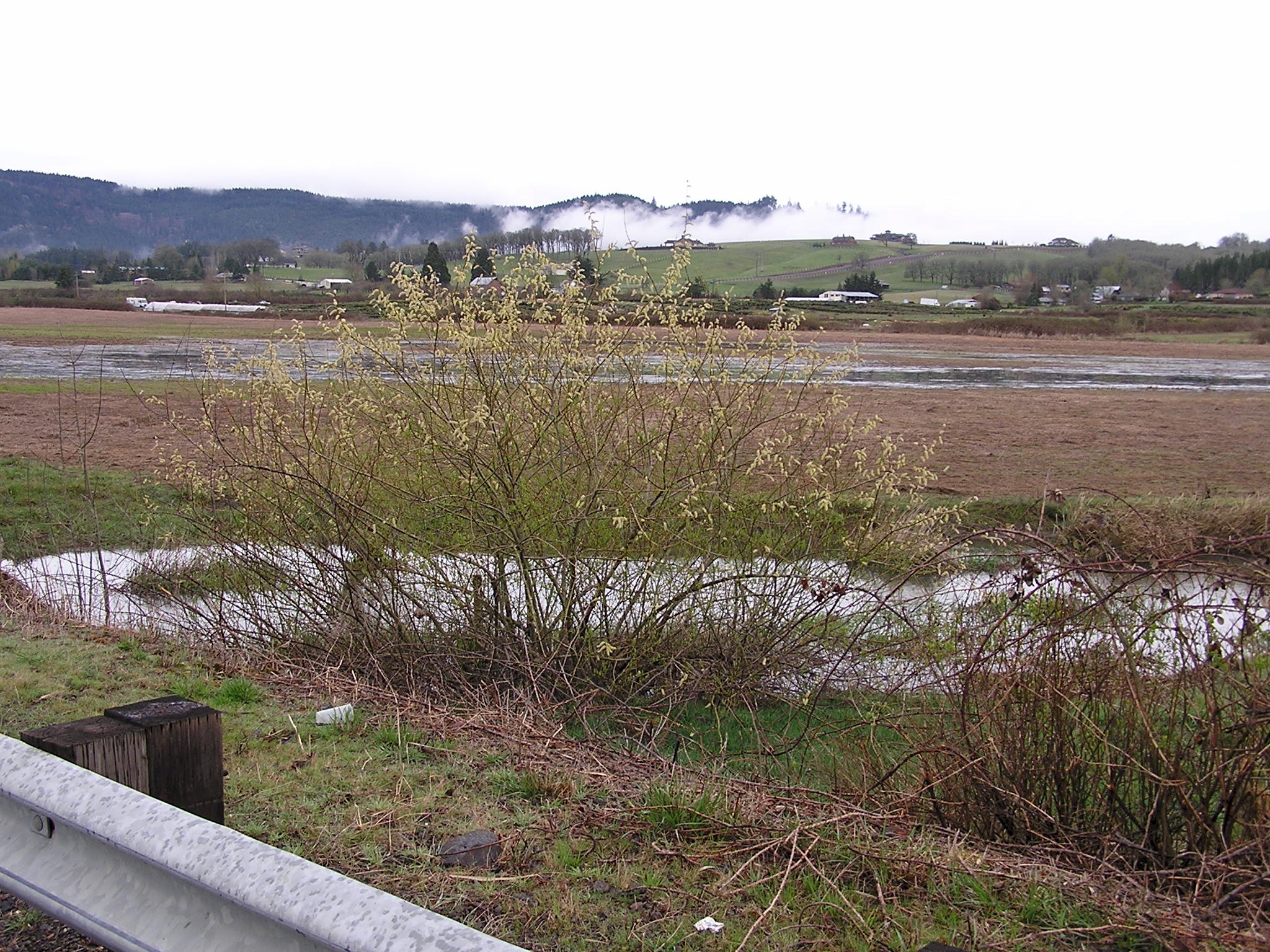
"In natural riparian areas, willow thickets form after sandbar,
arroyo and black willows colonize newly formed point bars. Other
mixed riparian plants, especially young cottonwoods, may be found in
this young, early successional habitat. Early successional habitat
is preferred by many migratory songbirds.
"The young willows have multiple small, flexible stems which form
thickets, or thick walls of stems. Willow thickets typically grow
close to the river channel. In this location, willow thickets
benefit both terrestrial and aquatic wildlife. They provide
protection, nesting, and foraging for wildlife that access the river
for water, and they release nutrients into the river that support
aquatic life. Willows flower early in the season, providing an early
food source for native pollinators."
|
|
Species Information For This Genus
Click on links below for
photos and details of each plant. |
|
As yet, not all northwest native
salix are covered in this website, though that may be done some time in the
future. For now, we have information about only five of our northwest native
salix.
|
|
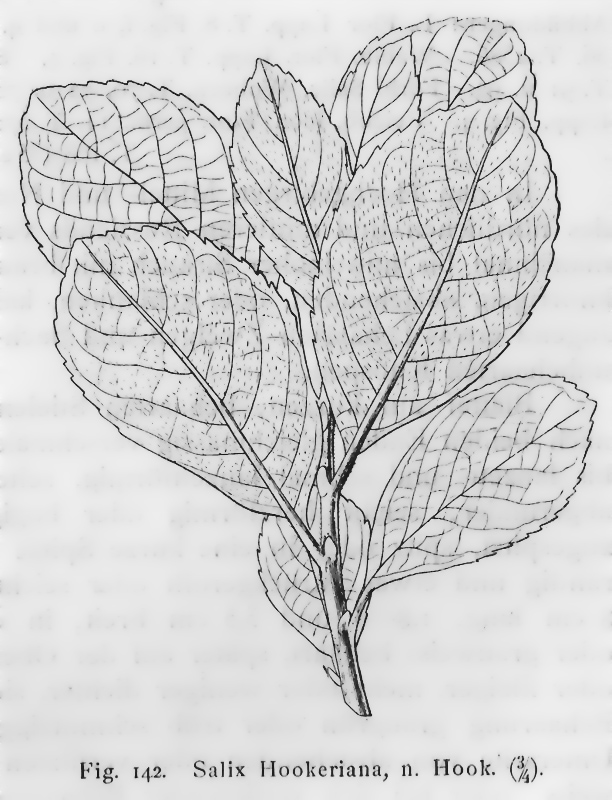
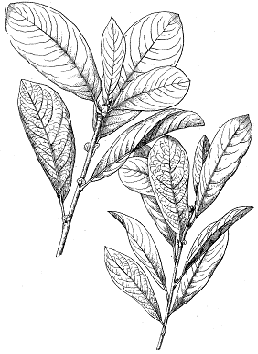
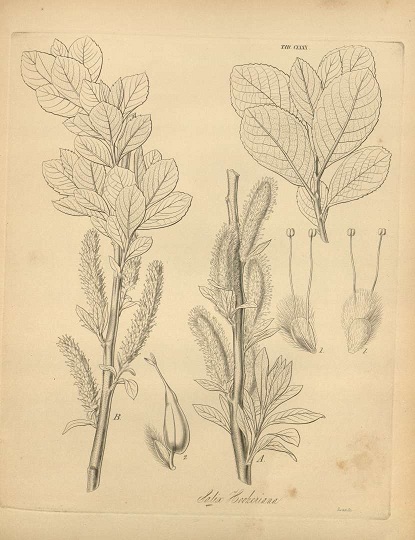
Salix hookeriana (Hooker's Willow)
This petite willow is rounded and shrubby with stout, stiff branches. It remains
small, reaching only 20' at maturity with a spread of up to 10.'
|
 |
|
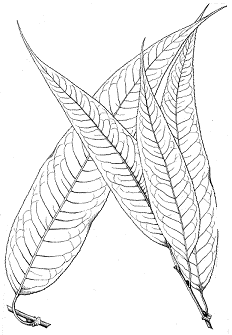
Salix lasiolepis (Arroyo Willow)
This upright willow will become a small tree to 30’ tall. It is found in low,
wet, full sun areas of California USDA zones 8-9.
|
 |
|
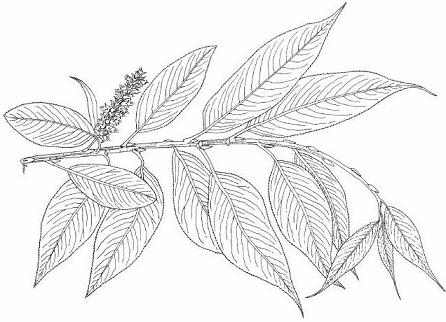
Salix lucida ssp. lasiandra (Pacific
Willow) Pacific Willow is one of the larger native willows, reaching 50'
tall with a slender, delicate form. It commonly develops several stems.
|
 |
|
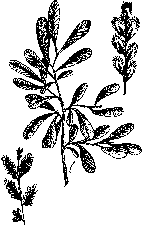
Salix scouleriana (Scouler's
Willow, Mountain Pussy Willow) A hardy, rapidly growing shrub that can
attain 30' and wide spread of 10.'
|
 |
|
Salix sitchensis (Sitka Willow)
This is the most common willow of the Pacific northwest but its range also
extends into the Rocky Mountains at low elevations and it is hardy to USDA zone
4. |
 |
|
|
|
|
|
|
 |
April Song by Sarah Teasdale.
Willow, in your April gown
Delicate and gleaming,
Do you mind in years gone by
All my dreaming?
Spring was like a call to me
That I could not answer,
I was chained to loneliness,
I, the dancer.
Willow, twinkling in the sun,
Still your leaves and hear me,
I can answer spring at last,
Love is near me!
Plant yourself some willows--a group or just a single tree. |
Did you know?

Blue Willow pattern probably
originated with Thomas Minton about 1780 in England. This soup
tureen with stand is from Chetham and Robinson's Terni Series,
c1830. Pink Willow is another pattern but not as favored among
collectors. |
From Homepage
October 27, 2007
Willows are always in
the background but never the star until spring when their furry
little buds bloom on their bare stems. I remember in first grade our
teacher had us color the soft little pussy willows with crayons. We
made pink ones and blue ones, purple and green. We had to be so
careful not to press too hard or the little furry blooms would come
off.
How can nature make a
plant that is so soft it feels like a kitten's paw?
Did you ever notice
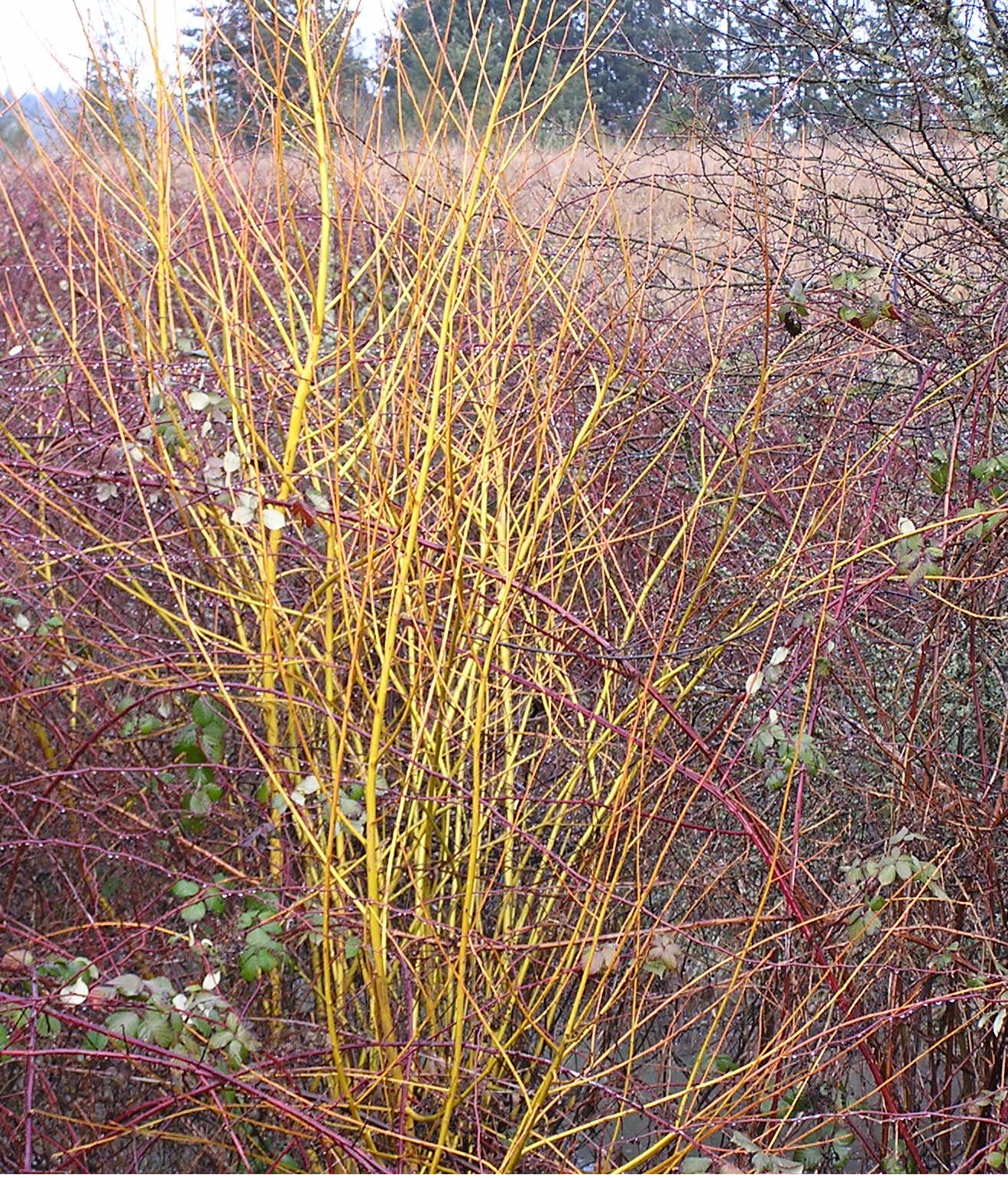
that some willows have red stems and some are bright yellow? Some
are brown and some are grey. How very lovely in the winter
landscape!
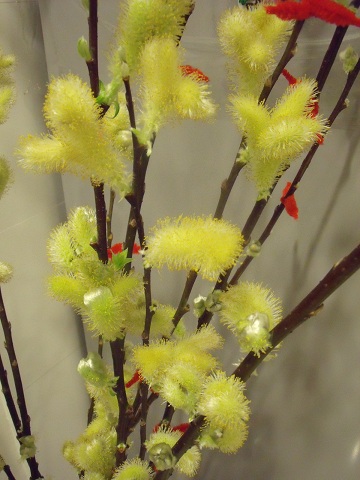
Did you know the
catkins are different colors and sizes?
Hooker's Willow (Salix
hookeriana) has yellow catkins 4" long
Arrowyo Willow (Salix
lasiolepis) has yellow-white catkins 1-2" long
Pacific Willow (Salix
lucida ssp. lasiandra) catkins are brighter yellow, male flowers are
2 1/2" and female flowers are up to 4 1/2"
Scouler's Willow (Salix
scouleriana) blooms 1-2" long and yellowish-white
Sitka Willow (Salix
sitchensis) catkins are cream to yellow, 2-3" long
Northwest native
willows are fond of sandy, wet locations along streams or bogs.
Their pliable stems are the best of all plants to make furniture and
trellis and baskets and wreaths. Original People used part of the
Arrowyo Willow for pain, much like aspirin. Sitka Willow is a good
plant for smoking meat and fish. All native willows are useful in
reclamation projects because they root well and hold the soil.
|
|
|
|