|
|
|
Hansen's Northwest Native Plant Database |
        |
|
|
|
Hansen's Northwest Native Plant Database |
|
|
|
Native Plants for Medicinal Uses |
|
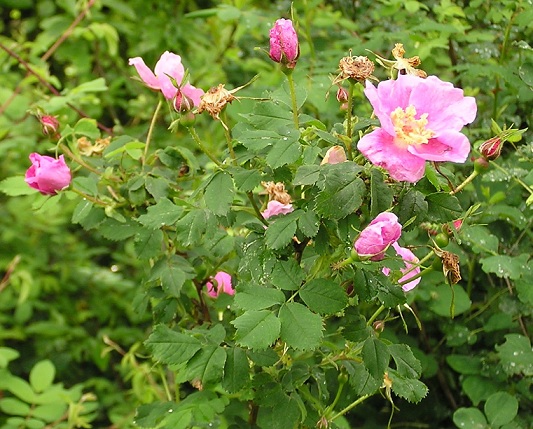
Every part of this wild rose will be used by nature. Some parts are valued for multiple reasons. For instance: the ripe hips are favorite food of birds, delicious source of vitamin C for humans, terrifically poignant as a winter tea, lovely in a vase with some cedar or fir sprigs for visual pleasure, and a surprisingly fulfilling snack to brighten up your mouth. |
|
Botanical name |
Common name |
Quality |
Part used |
Effect |
| Adiantum aleuticum | Maidenhair fern | Coughs, asthma, pleurisy, gentle diuretic | Green leaves | |
| Aesculus californica | Buckeye | Congestion | Leaves | Make into tea |
| Alnus rhombifolia | White alder | Circulation, skin disorders | Bark, leaves | Dry bark, make into decoction for circulation. Use leaves fresh--Parkinson wrote in 1640 that this has a cooling and drying effect on skin, stays inflammation. |
| Amelanchier alnifolia | Serviceberry | Eye wash | Green inner bark | Boil |
| Aquilegia | Columbine | Arthritis, biliousness and dizziness, diarrhea, sore throat | Roots, leaves | Mash roots and rub on aching joints. For biliousness and dizziness, boil leaves and roots together and take in 1/2 cup doses several times a day for a couple of days. Boil roots and drink tea for diarrhea. Chew leaves for sore throat. |
| Arctostaphylos columbiana | Hairy manzanita | Bronchitis, poison oak | Fruits, leaves | Make fruits and leaves into tea for bronchitis. Fruits are made into tea and used as wash on poison oak. |
| Arctostaphylos uva-ursi | Kinnikinnik, Bearberry | Diuretic | Leaves, dried | |
| Asarum caudatum | Wild Ginger | Emetic, cathartic, errhine, whooping cough, flatulence, indigestion, fever, cold, heart condition, sweat lodge, expectorant. | Rhizome, dried; also roots | Some say it promotes sneezing, helpful for head colds. Make into tea. |
| Ceanothus | Blueblossom, Wild lilac, Sweet bush, Buck brush | Astringent, tonic | Bark and roots | |
| Cercus occidentalis | Western redbud | Astringent | Bark of young shoots | Use for diarrhea, dysentery |
| Clematis ligusticifolia | Virgin's Bower | Astringent | Leaves | Wash wounds, treat skin diseases and cold sores. Called "herb of the goat" by Spanish-Americans |
| Cornus sericea | Red osier dogwood | Astringent, slight stimulant | Dried bark | Fresh bark will upset stomach |
| Fragaria | Wild strawberries | Diarrhea | Root, fruit and leaves | Roots are good for diarrhea. Fruit and leaves are laxative, diuretic and astringent for skin. |
| Heracleum lanatum | Cow parsnip | Rheumatism, sore throat, toothache | Roots | Mash, soak in water and use infusion as gargle or apply as poultice. Native Peoples used pieces of roots inserted in tooth cavity for toothache. |
| Ledum glandulosum | Laborador tea | Tonic, diaphoretic, pectoral, coughs, dyspepsia, dysentery, itch | Leaves | |
| Mahonia | Oregon Grapes | Tonic and alterative, psoriasis, syphilis, impure blood conditions, acne | Root, leaves | Root is good for ulcers, sores, and as tonic. Chew fresh leaves for acne. |
| Malus fusca | Western crabapple | Laxative, reduce stomach acidity | Fruit, juice | |
| Mimulus guttatus | Monkeyflower | Astringent, wounds | Root, leaves and stems | Root is astringent. Use raw leaves and stems as poultice for wounds. |
| Oxalis | Wood sorrel | Nausea, mouth sores, poultice, urinary infections, scurvy, sore throat | Leaves | Chew fresh leaves for nausea or mouth sores. Use fresh leaves for poultice. Brew leaves as tea for urinary infections, scurvy and sore throat--rich in vitamin C. |
| Pinus contorta | Lodgepole pine | Bandage, sore throat | Pitch from bark, buds | Pitch from bark is natural bandage. Chew raw buds for sore throat. |
| Pinus monticola | Western white pine | Rheumatism, kidney trouble, boils and coughs, stomach disorders | Young shoots, bark | Boil young shoots for rheumatism, kidney, boils and coughs. Bark is boiled and made into decoction for stomach disorders. |
| Populus tremuloides | Quaking aspen | Tonic, diuretic, diarrhcea | Dried bark | |
| Prunus virginana | Chokecherry | Diarrhea, nervousness | Inner bark | |
| Quercus | Oaks | Skin disorders | Acorns | Prepare meal, allow to mold. Scrape mold off and store in damp place. Used for boils, sores and other inflamations. |
| Rhamnus purshiana | Cascara, chittam | Laxative, cathartic, tonic | Bark, berries | Long used by Native Peoples who introduced early Spanish settlers to the plant. The Spanish called it Cascara Sagrada or "sacred bark." Natives would girdle the tree at two points three feet apart and make verticle cuts between, then peel off bark and dry it. For tonic, put small piece of bark in water for 12 hours, remove bark and drink water. |
| Rhus glabra | Smooth sumac | Poultice, refrigerant, diuretic | Leaves and fruit | Bruise the leaves and fruit, apply poultice to skin for skin diseases |
| Ribes aureum, Ribes cereum | Golden currant, Red currant | Antiscorbutic, antiseptic, aperiant, refrigerant | Fruit | Do not store in metal container! Will create deadly poison! Make jelly of fruit and apply to burns. It will ease pain and prevent blisters if applied immediately. |
| Rosa gymnocarpa, r. nutkana, pisocarpa, r. woodsii | Bald-Hip, Nootka, Pea-Fruit and Wood's Roses | Arthritis, dyspepsia | Petals | Make into tea with peppermint, lemon peals and linden leaves |
| Symphorocarpos alba | Snowberry | Colds and stomach-ache, laxative | Roots, fruit | Pound roots and steep for colds and stomach-ache. Fruit acts as laxative. Caution: leaves are poison! |
| Umbellularia californica | Oregon myrtle, California bay | Anesthetic, headache | Leaves and seeds | Oil from leaves and seeds are anesthetic. Native peoples placed leaves on head and covered for headache. If leaves are held under nose, it is said to cause headache or sneezing! |
| Vitis californica | Wild grape | Diarrhea, hepatitis, stomach-ache, sore breast, external cuts | Leaf | Tea from leaves good for diarrhea, hepatitis and stomach-ache. Poultice will ease sore breasts and external cuts. |
|
